
How to track your credit card spending and avoid surprises.
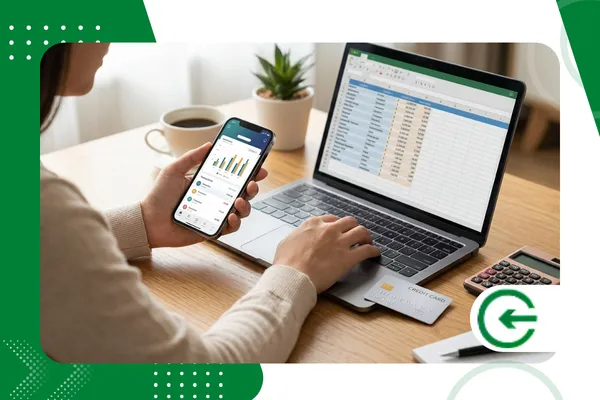
Learn how Track your credit card spending. It's gone from being a personal finance tip to becoming a survival tactic in 2026.
Adverts
With the omnipresence of invisible payments and digital wallets, money seems to have become a dangerous abstraction that slips through our fingers with every click.
Maintaining control over every transaction is not just a matter of organization; it's a shield against the silent erosion of assets.
When the bill arrives unannounced, the damage is already done, and interest often takes its toll due to our lack of attention or excessive optimism about our bank balance.
The following lines detail methods that go beyond the obvious. We will move away from reactive management and towards proactive control, using real-time monitoring as a compass to navigate daily consumption without sinking into avoidable debt.
advertising
Summary
- The urgency of real-time monitoring
- Tools that truly deliver clarity.
- The logic of category limits
- Hidden traps in your monthly bill.
- Comparative table of methods
- Final reflection
- FAQ
Why is real-time monitoring essential?
The current economic landscape does not forgive slowness. By 2026, the speed of contactless and biometric transactions has created a cognitive disconnect: we buy without feeling the weight of the choice.
It's easy to lose track of the accumulated volume when the payment interface is designed to be as painless as possible.
Waiting until the end of the month to understand where the money went is a classic strategic mistake.
This financial passivity creates a mismatch between your perception of your budget and the reality of your bank statement, culminating in that uncomfortable feeling that your salary has "disappeared" without a logical explanation.
To know Track your credit card spending. It allows you to act as the auditor of your own life.
Identifying a forgotten signature or a duplicate charge the moment it occurs saves hours of stress and bureaucracy with bank customer service.
Recent statistics from Central Bank of Brazil They suggest that predictability is what separates those who invest from those who merely survive.
Without looking in the rearview mirror of expenses, it becomes impossible to plan the path ahead with any degree of certainty or realism.
A routine of checking, even a brief one, helps to anticipate the months of greatest pressure.
If you realize in the second week that your leisure time has exceeded your goal, there's still time to adjust course before a negative balance becomes an inevitable reality.
Transforming cold, hard data into financial intelligence removes the emotional charge from purchasing decisions.
When spending is visible and categorized, impulse loses power to rationality, eliminating that chronic anxiety of those who fear opening their banking app.
Which tools are most effective for control?
The market is saturated with promises, but real effectiveness in 2026 lies in systems that use artificial intelligence to read the chaos of transactions.
Apps that centralize different card brands and banks save the mental effort of adding up bills scattered across various devices.
Still, some people find a necessary level of sobriety in Excel spreadsheets.
The act of manually entering data, while seemingly archaic, forces reflection on the value of each item purchased, something that complete automation often ends up numbing.
The secret lies not in the sophistication of the software, but in centralization.
The objective to Track your credit card spending. The goal should be to create a single, unified dashboard where a holistic view prevents small, isolated expenses from masking a larger budget deficit.
Enabling push notifications is the first step towards basic financial hygiene.
Receiving the purchase amount on your cell phone seconds after swiping your card acts as a physical reminder that your assets have decreased, serving as a psychological brake against rampant consumerism.
Analyzing the consolidated statement allows you to see patterns that would go unnoticed in everyday life.
Perhaps that daily coffee or recurring ride-sharing service is draining more resources than a vacation trip, and only consolidated data reveals this truth.
Prefer graphical visualizations that show the percentage for each category.
It's much more impactful to visually see that eating out consumes 40% of your income than just reading an endless list of fragmented values on your bank statement.
++ Tools to optimize storage space on Android and iPhone phones.
How do I set spending limits by category?
Treating your credit card limit as if it were available cash is one of the biggest misconceptions of modern life.
The smart strategy consists of breaking down this total limit into specific "boxes" for leisure, food, and shopping, respecting the reality of your cash flow.
The 50-30-20 rule remains an interesting guideline, but it needs adjustments to account for current volatility.
Allocating specific portions of your budget to what is essential and what is purely a desire prevents the immediate gratification of a new purchase from sacrificing your security for tomorrow.
To the Track your credit card spending. By segmenting your decisions, you gain the power to say "no" based on data.
If the entertainment budget ceiling was reached on the 15th, future spending should be reconsidered or funded by cuts in other, less priority areas.
This fragmented approach prevents the domino effect, where a small excess here and another there turn into debt that requires the use of overdraft facilities or installments with extortionate interest rates that never end.
Reviewing these limits periodically is vital. Priorities change, prices rise, and your planning needs to adapt to these changes, ensuring that financial control becomes a tool for freedom, not a bureaucratic prison.
Controlled flexibility allows one to deal with the unexpected without panicking.
If an appliance breaks down, you can rearrange the limits of the other categories for that month, maintaining the integrity of your overall plan without having to resort to new loans.
++ How to use to-do list apps with collaborative features
How to avoid the main pitfalls of invoicing?
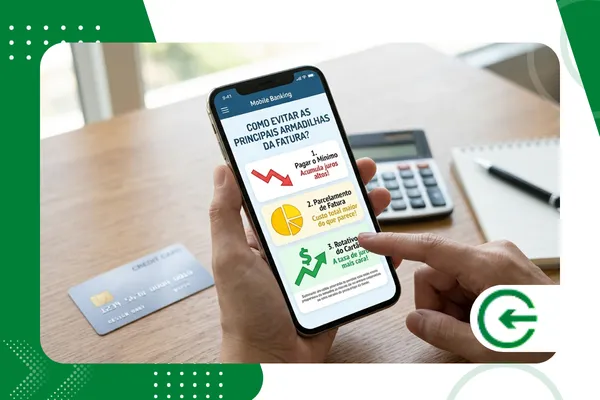
The endless installment plan is one of the most seductive and dangerous traps of the Brazilian system.
Small purchases made in installments create a commitment to future income that "freezes" your budget, removing any room for maneuver for opportunities or emergencies.
Items such as unsolicited credit card insurance or annual fees that have been silently reinstated often get hidden among lengthy lists.
Those who do not cultivate the habit of Track your credit card spending. You end up paying for services you don't even use.
The minimum wage should be seen as a red flag.
In Brazil in 2026, revolving credit interest rates remain prohibitive, and entering this cycle is like trying to climb a speeding escalator; the effort rarely compensates for the debt.
Be extra careful with "free trial" subscriptions. Many companies profit precisely from consumers forgetting about the charge, who only notice it months later, when the amount has already become an invisible fixed expense in the household budget.
Often, the solution is just a click away, but it requires the proactive approach of carefully checking every line of the invoice.
True financial security comes from constant education. Treating a credit card as a tool for convenience and accumulating benefits—and not as an extension of your salary—is what determines who will have peace of mind in the long run.
++ Checklist apps for trips and outings.
Comparison Table: Screening Methods
| Method | Agility | Depth | Cost | Recommended Profile |
| Bank Apps | High | Basic | Zero | For those seeking speed. |
| Google Sheets/Excel | Low | Total | Zero | For those who appreciate details. |
| AI-powered aggregators | Maximum | High | Signature | For those who have many bills |
| Notebook | Manual | Limited | Irrelevant | For those who are just starting out. |
Final reflection
Managing your own money requires a proactive approach that most financial institutions do not encourage.
The system is designed to encourage you to spend without thinking, but real security comes from the opposite approach: full awareness of every transaction made.
Implementing a monitoring system isn't about restriction, but about conscious choice. When you decide Track your credit card spending.[This person] is choosing where their efforts will be directed, ensuring that the money serves their projects, and not the other way around.
Financial control allows the card to become a powerful ally for concentrating spending and generating miles or cashback, transforming a consumption tool into an earning strategy.
But this only works for those who keep their eyes open and their numbers organized.
Don't wait for next month or a crisis to start looking at your releases. Stability is built on small daily adjustments, rejecting the superfluous, and constantly monitoring the fate of your capital.
Choose the tool that best suits your routine, dedicate a few minutes each week to reviewing your goals, and reap the rewards of living with peace of mind, knowing exactly where you stand in the financial arena.
Current technology offers all the necessary tools for impeccable management; what is often lacking is simply the first step towards discipline and commitment to one's own prosperity and autonomy.
FAQ (Frequently Asked Questions)
What is the real advantage of checking your bank statement every week?
Looking at your spending weekly allows you to correct course before the damage becomes irreversible. If you overspent one week, you can compensate the following week, keeping your monthly average under control.
Is it safe to centralize all expenses on a credit card?
It is safe and even recommended to facilitate tracking, provided you have the amount available in your checking account to pay the full amount and do not fall into the trap of interest charges.
How can I automatically track my credit card spending?
The best way is to use finance apps that connect to your banks via Open Finance, categorizing each purchase as soon as it's approved by the payment processor.
What to do if the bank refuses to reverse an unusual charge?
If direct contact does not resolve the issue, file a complaint with the Central Bank and use consumer protection agencies, providing all supporting documents and service records.
Does paying for purchases in installments without interest affect tracking?
Yes, because it compromises the credit limit for future months and makes it difficult to visualize the actual spending for the current month. Ideally, only high-value and absolutely necessary items should be paid in installments.
To learn more about the impact of interest rates and the responsible use of credit, visit the portal. Sebrae – Finance.
