
How crossplay mobile games enhance online fun
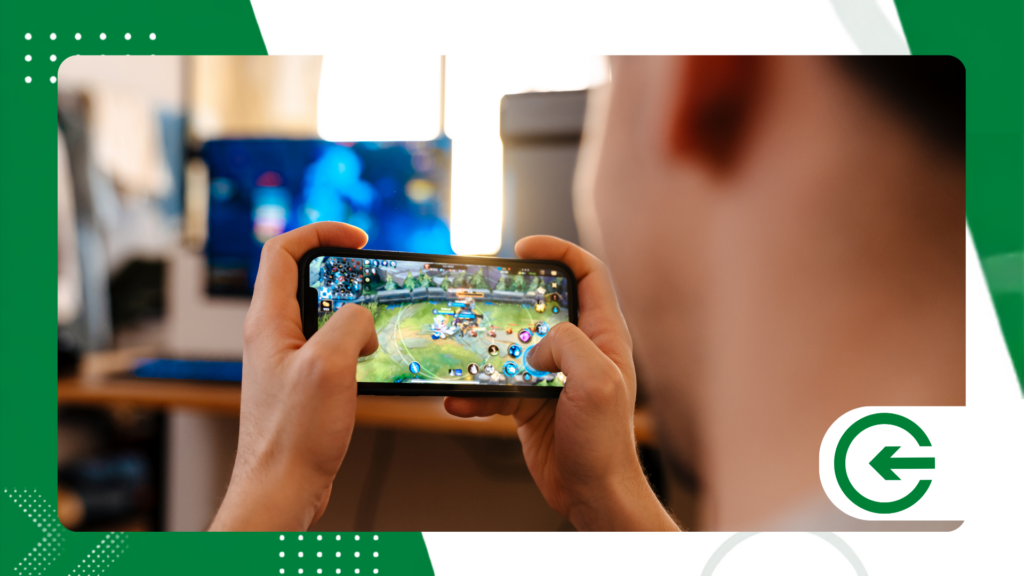
mobile games with crossplay They transformed the way we connect, shattering operational barriers that previously isolated cell phones from computers and desktop consoles.
Adverts
This seamless integration allows you to play with friends anywhere, bringing communities closer together in synchronized and accessible matches.
Understanding the inner workings of this architecture is essential to getting the best performance from your device and choosing where to invest your time.
Summary
- How crossplay technology has evolved on mobile devices.
- What are the main technical challenges of platform integration?
- Which games are leading the way in integrating mobile phones, consoles, and computers?
- Performance and Features Comparison by Platform
- How peripheral support balances competitive matches.
- What are the best practices for optimizing smartphone performance?
- Conclusion
- Frequently Asked Questions (FAQ)
How crossplay technology has evolved on mobile devices.
Ten years ago, imagining a smartphone running the same game as a top-of-the-line PC sounded like a dystopian utopia from development offices.
The evolution of mobile chips has changed this story, allowing heavy engines like Unreal Engine 5 to run in your pocket with surprising stability.
advertising
The market has finally abandoned closed ecosystems and adopted the single account, linking progress, cosmetics, and achievements to a centralized profile.
This structural change transformed mobile games with crossplay Setting the market standard, shortening queues and unifying previously fragmented audiences.
Large studios have understood that optimizing code to prevent overheating of devices is not a luxury, but a necessity to keep the player engaged.
The result is a real democratization of access: mid-range devices are now entering the same battlefield as machines costing tens of thousands of reais.
What are the main technical challenges of platform integration?
Bringing together such disparate platforms in the same arena requires overcoming significant differences in frame rate, ergonomics, and processing power.
While PC users achieve 240 frames per second without blinking, cell phones struggle to maintain 60 frames per second without draining their batteries.
The major point of contention — and where the danger of imbalance lies — is the calibration of the aim assist for touchscreens.
Giving too much of an advantage to mobile devices angers those who use a mouse; giving too little makes the game unplayable on mobile. The adjustment needs to be surgical.
In addition to that, dealing with the instability of 5G versus fiber optics requires brutal latency compensation algorithms to avoid the infamous "lag".
Which games are leading the way in integrating mobile phones, consoles, and computers?
Some titles have not only proven that the model works, but have rewritten the rules of distribution and engagement in the video game industry.
Fortnite was the audacious pioneer, proving that it was feasible to put an iPhone player on the same island as a PlayStation 5 user.
Genshin Impact took this premise to the open-world RPG genre, allowing players to explore dense environments on mobile and continue their journey on PC without any hiccups.
Warzone Mobile has taken inventory integration a step further, connecting weapon advancement directly to the main games in the Call of Duty franchise.
Minecraft remains unbeatable as the silent engine of this revolution, uniting generations through its versatile and unified Bedrock Edition.
Roblox expanded the concept by allowing user-created experiences to run without complex adaptations between mobile phones, consoles, and desktops.
See the popularity of these mobile games with crossplay It clearly shows that the audience doesn't care about technical barriers, they just want to play together.
++ Addictive casual mobile games that lead in downloads
Performance and Features Comparison by Platform
Putting the data on the table helps visualize where mobile hardware excels in practicality and where it needs help to compete on a level playing field.
The following table summarizes the average operational scenario that developers face when balancing each ecosystem on the same server.
++ How free-to-play mobile games are dominating entertainment.
| Platform | Average Frame Rate | Supported Input Methods | Predominant Connection Type | Progress Synchronization |
| High-End Smartphone | 60 – 120 FPS | Touchscreen, Bluetooth Gamepads | Wi-Fi 6, 5G Mobile Networks | Cloud / Single Account |
| Modern Consoles | 60 – 120 FPS | Native Gamepad, Keyboard/Mouse | Ethernet cable, Wi-Fi 6 | Cloud / Single Account |
| Computer (PC) | 120 – 240+ FPS | Keyboard and Mouse, Gamepads | Dedicated Ethernet Cable | Cloud / Single Account |
How does artificial intelligence optimize data flow in crossplay mobile

The use of machine learning algorithms has revolutionized network traffic management in cross-platform games.
Instead of simply reacting to signal fluctuations, current predictive systems analyze players' movement and latency patterns in real time, predicting actions milliseconds before they happen.
This intelligent filtering drastically reduces the amount of data transmitted between smartphones and central servers, ensuring stability and visual fluidity even on less-than-ideal mobile connections.
If you need more details about the implementation of these technologies or new paragraphs for your article, just let us know!
How does network architecture support real-time synchronization?
The great advantage of modern games lies in their ability to process thousands of requests per second on strategically distributed regional servers.
This structure drastically reduces latency and prevents packet loss during intense clashes in virtual arenas.
Unifying user profiles in a centralized database allows you to instantly save inventory and achievements to the cloud.
Thus, the player can start the game on their smartphone while commuting on public transport and continue the journey on their computer without losing any progress.
To delve deeper into the impact of hardware and the system optimizations required on the platform, it's worth checking out the technical guide at [link/website address]. Official Documentation for Android Developers, a fundamental reference for understanding this integration.
How peripheral support balances competitive matches.
Trying to play a decisive match using only virtual buttons on the screen has always been a frustrating and inaccurate experience for most.
The emergence of physical controllers with direct USB-C connectivity changed the game by eliminating the signal delay typical of older Bluetooth systems.
Beyond traditional controls, keyboard and mouse support on mobile phones has brought the smartphone closer to the tactical experience seen on computers.
Modern mobile operating systems already recognize these peripherals instantly, allowing for subtle sensitivity adjustments and complete key remapping.
To avoid glaring unfairness, most games separate matchmaking queues by the type of controller detected during the search.
With this, the adoption of accessories gave maturity to mobile games with crossplay, attracting those seeking serious competition without relying on a PC.
++ CHow to set up a different kind of picnic in the backyard, living room, or balcony.
What are the best practices for optimizing smartphone performance?
No game runs smoothly by miracle; adjusting your phone's operating system is a mandatory step to avoid sudden drops in performance mid-game.
Enabling the device's native game mode helps focus processing on the application and blocks key notifications that cause stuttering.
Lowering the level of shadows and reflections is often a smart trade-off: you gain frame rate without losing visual clarity of the subjects.
5 GHz or Wi-Fi 6 networks reduce abrupt ping variations, preventing your shots from simply not being registered.
Removing your phone from its case during long gaming sessions helps with heat exchange with the environment, preventing the processor from reducing its clock speed due to overheating.
Detailed analyses of thermal stress and tactile response benchmarks are usually published with technical rigor by the team at Digital Foundry.
Conclusion
The breakdown of boundaries between platforms has forever changed how we consume and share moments within digital entertainment.
More than just a technical evolution, seeing mobile phones playing alongside consoles and PCs represents a clear victory of accessibility over hardware isolation.
With faster screens and ultra-low latency mobile networks, the practical performance difference continues to shrink with each new generation.
Those who invest in a good accessory and spend ten minutes setting up the device are guaranteed a desktop-level experience in their pocket.
The industry has already realized that the future of gaming doesn't belong in a specific box under the TV, but rather wherever the community decides to be.
Frequently Asked Questions (FAQ)
What does crossplay functionality mean on mobile phones?
It's the technical feature that allows mobile gamers to participate in the same real-time match against people on PC or consoles.
How does cross-platform progress work?
Your progress is saved to the developer's account; when you switch devices, your skins, coins, and levels remain exactly where you left off.
Is it possible to disable pairing with other platforms?
Yes, almost all games have a toggle in the options to limit matchmaking to only players on the same platform as you.
Are mobile gamers at a disadvantage compared to PC gamers?
There is a disadvantage in touch precision, but the use of physical controls and the division of rooms by peripheral significantly reduces this difference.
Does crossplay consume more mobile data?
No, the amount of data exchanged with the server is practically the same, as it only transmits coordinates and actions of the players.
