
How AI-powered micro-habit apps help with daily health.
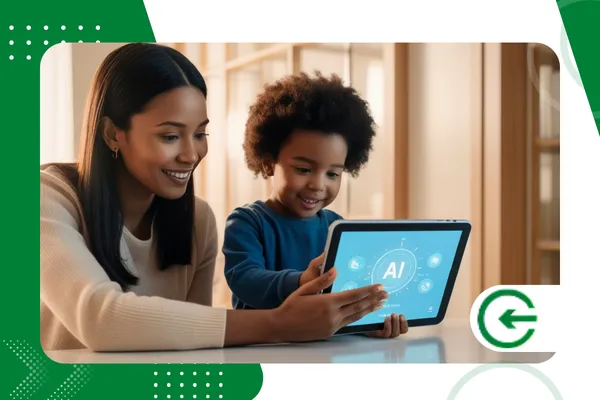
You AI-powered micro-habit apps They've gone from being mere step counters to becoming architects of our routines, using predictive algorithms that adjust well-being with a precision that sometimes seems almost too intuitive.
ADVERTISING
This paradigm shift allows previously overwhelming goals to be broken down into such tiny actions that mental resistance simply evaporates, facilitating success for those seeking longevity without the burden of constant self-criticism.
In this guide, we delve into the mechanics behind artificial intelligence applied to human behavior, analyzing real metrics and strategies to make these tools organic allies for your health.
Summary
- What defines a smart micro-habit?
- Personalization beyond the obvious.
- Benefits validated by real-world use.
- Table: Comparison of Technological Evolution
- Selection criteria: The ideal app
- FAQ: What nobody asks about AI
How do micro-habits work in the age of artificial intelligence?
The logic behind micro-habits is "minimum viable effort." The idea is to perform tasks so ridiculously simple that laziness loses its appeal, creating a solid foundation for consistency even before focusing on intensity.
However, AI adds a layer of sophistication here: it not only suggests the habit, but uses data processing to understand its specific triggers, something that is often misinterpreted as mere repetition.
advertising
Biometric sensors in wearable devices power these systems, allowing software to identify windows of biological opportunity, suggesting an action exactly when your body is most likely to accept it.
The difference of AI-powered micro-habit apps It's all about machine learning. The app understands that your stress increases on Tuesdays and adjusts the tasks accordingly to avoid overloading your mental health.
Instead of requiring a thirty-minute meditation after an exhausting day, the system can suggest just one minute of conscious breathing upon detecting a spike in heart rate via smartwatch.
What is the role of predictive analytics in daily well-being?
Artificial intelligence acts as a silent mentor, analyzing millions of interactions to predict the exact moment you are about to give up on a goal or neglect sleep.
Advanced algorithms cross-reference external variables, such as the weather forecast or your appointment schedule, with your historical motivation levels, adjusting the difficulty of tasks to prevent the dreaded burnout.
This hyper-personalization transforms the health plan into something alive. It's an ecosystem that retreats when you're overwhelmed and advances when it realizes you've gained autonomy and extra breathing room.
Short, surgical interventions have a much higher retention rate than grand New Year's resolutions, precisely because technology works behind the scenes to maintain engagement without seeming like a military obligation.
++ How facial recognition technology speeds up access.
How does habit automation improve mental and physical health?
The greatest advantage of these tools is the relief they provide from decision fatigue. By automating the choice of what to do next, you preserve mental energy for what truly requires creativity and focus.
When the AI-powered micro-habit apps They detect prolonged sedentary behavior; they not only send a generic alert, but also suggest specific mobility options based on your recent physical recovery.
There is also a clear improvement in circadian rhythm regulation. The AI adjusts digital disconnection reminders based on your light exposure and cognitive performance recorded over the hours.
Small daily victories release dopamine in a sustainable way. This cycle of positive reinforcement protects the brain against the anxiety generated by the pursuit of immediate and often biologically impossible results.
++ How AI-powered navigation apps help avoid traffic and delays.
Comparison: The Evolution of Digital Media
| Feature | Traditional Applications | Ecosystems with AI |
| Goals | Static and manual | Suggested by biometrics |
| Alerts | Fixed and boring schedules | Context-based triggers |
| Progress | Simple bar charts | Insights into cause and effect |
| Flexibility | Strict and punitive | Adapts according to fatigue. |
| Interaction | Passive | Proactive and predictive |
What criteria should be used to choose the best habit tracking software?
Avoid apps that look like nothing more than colorful spreadsheets. Prioritize platforms that demonstrate ethical transparency in the use of your data, especially sensitive data, ensuring that your privacy is not the price of the service.
Integration is the heart of effectiveness. An app that doesn't "talk" to your watch or calendar will just be another forgotten icon on your phone screen after the first week of use.
A fluid interface is not a luxury, it's a necessity. If an app generates friction or takes a long time to load, it becomes an obstacle to the very micro-habit it's supposed to facilitate.
Many AI-powered micro-habit apps They are niche markets. Some excel in nutrition, others in sleep. Identify which area of your life is most chaotic today and start with a solution specialized in that sector.
Read between the lines of the reviews. Find out if the insights generated by artificial intelligence are truly useful or if they are just generic motivational phrases disguised as advanced technology.
++ AI in the cell phone camera that automatically improves photos.
Algorithmic positive reinforcement and the construction of discipline.
AI uses gamification that adapts to your psychological profile. Some people respond better to competitive challenges, while others need calm and minimalist progress visualizations.
This adjustment avoids the "noise effect," where the brain learns to ignore notifications that don't provide a real reward, making habit tracking something you want to see, not something you avoid.
By validating small achievements, the system alters your self-perception. You stop being someone "trying to be healthy" and become someone who "is healthy," thus solidifying your identity.
Consistency as a tool for profound transformation.
Science proves that the combined effect of small actions outweighs any shock of fleeting intensity. It's the power of compound interest applied directly to your physiology and mental health.
You AI-powered micro-habit apps They ensure you remain in the "flow zone": where the challenge is big enough not to bore you, but small enough not to cause anxiety.
In this state, the habit ceases to be a task and becomes a characteristic of your routine. Technology serves as the scaffolding that supports the work until the structure is strong enough to stand on its own.
The horizon of preventive and predictive health
Soon, interacting with these apps will be indistinguishable from a conversation with an expert. Advances in language models will allow for advice that is much more subtle and deeply rooted in your reality.
The big promise is invisible diagnosis. AI could identify subtle changes in your typing or movement patterns that precede symptoms of chronic stress or other clinical conditions.
To set up AI-powered micro-habit apps Now is like training a personal assistant who will know your needs better than you will know them yourself in a few years.
Follow the latest trends in innovation and digital security on the portal of Ministry of Health, which regularly updates digital health standards in Brazil.
Final Reflection
Adopting technology to manage habits is not an admission of weakness, but a smart strategy. It's using the brute force of data processing to compensate for the natural shortcomings of our willpower.
Artificial intelligence doesn't do the work for you, but it clears the path, removing the obstacles of procrastination and forgetfulness. The result is a more organized and, fundamentally, more human life.
Frequently Asked Questions (FAQ)
1. Can excessive technology lead to anxiety?
It can, if the app is poorly designed. That's why modern AIs focus on "calm technology," which only interrupts when strictly necessary for its benefit.
2. Is my health data truly protected?
It depends on the developer. Always check if the app complies with laws like the LGPD (Brazilian General Data Protection Law) and if it allows you to delete your history at any time.
3. Can AI replace a coach or nutritionist?
It acts as a daily support tool, but it does not replace the clinical expertise of a professional in cases of pathologies or high-performance athletic goals.
4. Why are micro-habits better than big goals?
Because they bypass the amygdala, the part of the brain that triggers fear in the face of sudden changes, allowing you to change without activating your defense systems.
5. What will be the average cost of these apps in 2026?
Many operate on a "freemium" model. Basic functions are free, but heavy predictive AI processing often requires monthly subscriptions to cover server and development costs.
