
How facial recognition technology speeds up access.
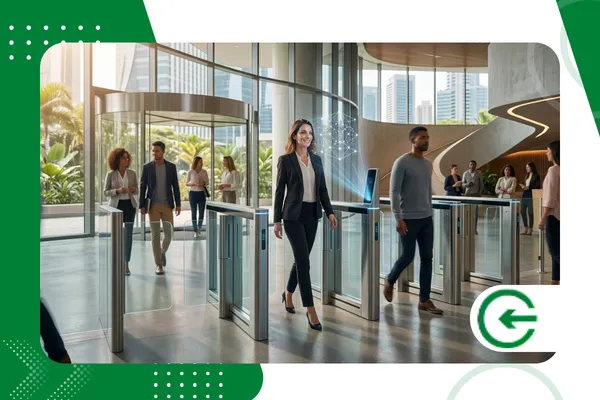
A facial recognition technology It has ceased to be a futuristic promise and has become the invisible foundation that sustains circulation in large urban and corporate centers.
ADVERTISING
Unlike physical keys that we forget or cards that wear out, this system uses algorithms to translate facial geometry into a unique, secure, and fluid digital identity.
In the following lines, we deconstruct the impact of this innovation, analyzing how it reshapes our relationship with space and privacy under the strict regulations in force in 2026.
Table of Contents
- The end of operational bottlenecks.
- The mathematics of financial efficiency
- Security: beyond the physical barrier
- The ethical imperative of privacy.
- Comparative table of technologies
- Final perspective and FAQ
How does facial biometrics solve the chaos of queuing during peak hours?
Time is the most scarce asset in access management, and speed here is not just a luxury, but a mechanical necessity to avoid workflow collapse at reception desks.
By adopting the facial recognition technologyIn this way, the user ceases to be a bearer of an object and becomes the credential itself, allowing authentication to occur on the go.
advertising
State-of-the-art systems process data in less than half a second, a pace that maintains the inertia of natural movement, something that methods of physical contact could never replicate without generating friction.
This almost imperceptible transition between the public and restricted environments removes that bureaucratic friction which, although it may seem small in isolation, drains productivity and patience over the course of a week.
Eliminating peripherals like visitor badges or touch-based digital biometrics centers the journey on biological identity, making entry a natural consequence of the individual's physical presence.
Why is migrating to facial recognition a strategic financial decision?
Often, managers only look at the initial implementation cost, ignoring the fact that maintaining outdated technologies creates a silent and continuous drain on infrastructure budgets.
Betting on facial recognition technology It eliminates costs associated with the endless replacement of proximity cards and simplifies the necessary hardware, which tends to be more durable and less mechanical.
There is an obvious gain in scale: automation frees up surveillance teams for analytical functions, moving away from the monotonous task of checking documents and into a more strategic role of prevention.
In HR, precision is surgical, connecting to management systems to ensure that time and attendance records are fraud-proof, preventing common occurrences in manual methods or those using shared passwords.
Market reports indicate that the cumulative operational savings could reach 30% in just two years, transforming what was an expense into a rapidly profitable investment.
What makes facial authentication more robust against hacking?
Some people fear the vulnerability of their image, but modern security uses what is called Liveness Detectionwhich differentiates a real face from high-resolution photos, videos, or masks.
A facial recognition technology Contemporary cryptography maps thousands of nodal points, creating a cryptographic signature that is not stored as a "photo," but as an undecipherable mathematical code.
Unlike a password, which can be spoken, or a key, which can be stolen, facial biometrics are technically non-transferable, shielding the perimeter against the misuse of others' credentials.
Any anomaly in access triggers immediate alerts, allowing the system's intelligence to act preventively before a threat even gains physical access to the interior of the protected facilities.
+ Smart smartphone alerts that help with daily routines.
How to balance monitoring and privacy within the LGPD (Brazilian General Data Protection Law)?
By 2026, ethical data handling will no longer be optional; today, transparency is what separates an innovative company from a legally vulnerable and questionable institution.
The use of facial recognition technology It requires clear purposes — such as safeguarding heritage — and must respect the citizen's fundamental right to their own digital image.
Technically, the risk of data leaks is mitigated when the system does not store the image of the face itself, but rather the vector image derived from it, rendering the data useless outside of that specific ecosystem.
Responsible institutions prepare a Data Protection Impact Assessment (DPIA), documenting each stage of the information lifecycle, from collection to secure disposal on servers.
By choosing technology partners that adhere to international encryption standards, the organization not only complies with the law but also builds a relationship of trust and integrity with its audience.
+ AI in the cell phone camera that automatically improves photos.
Comparative Analysis: Access Control Methods (Data 2026)
| Technology | Access Time (Average) | Maintenance Cost | Security Level | User Experience |
| Facial Recognition | 0.3s – 0.5s | Bass (Digital) | Very High | Contactless / Fluid |
| Proximity Card | 2.0s – 3.5s | High (Losses) | Average | Physical / Subject to Loss |
| Digital Biometrics (Fingerprint) | 1.5s – 2.5s | Medium (Cleaning) | High | Physical Contact Required |
| Keyboard Password | 5.0s – 8.0s | Low | Low | Slow / Forgetfulness |
Where does facial application truly transform daily life?
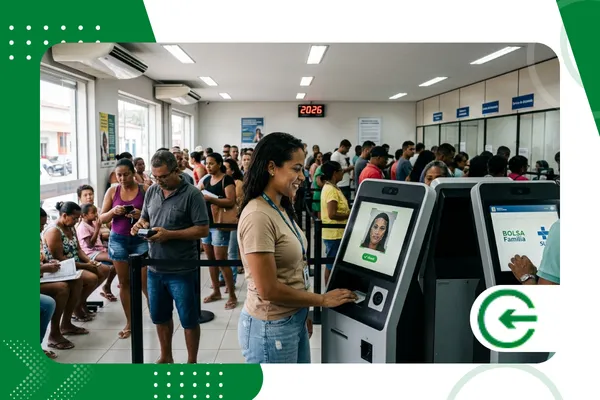
Versatility is what makes this solution so fascinating, adapting with equal efficiency to high-end residential condominiums or construction sites with hundreds of workers.
In the logistics environment, the facial recognition technology It validates drivers in seconds, ensuring that only qualified professionals take command of fleets or access sensitive cargo areas.
Schools use the system to create a protective perimeter, automating student release and ensuring that only authorized guardians cross the gates at school dismissal times.
Healthcare sectors, where hygiene is critical, see contactless access as an additional sanitary barrier, protecting hospital environments against cross-contamination from surfaces touched by everyone.
In addition to turnstiles, integration with CCTV allows for the identification of atypical behaviors in the perimeter, elevating surveillance from a reactive state to an intelligent and highly effective anticipatory posture.
+ How AI-powered navigation apps help avoid traffic and delays.
Reflection
Integrate facial recognition technology The key to operations by 2026 is recognizing that security and convenience don't have to be opposing forces, but rather allies in building smarter spaces.
By removing friction from inputs and outputs, organizations give individuals back what they value most: time and peace of mind, without relinquishing strict control.
To delve deeper into the technical nuances between identity verification and mass recognition, it's worth checking out the insights from... I Proov about the evolution of modern biometric authentication.
FAQ – Frequently Asked Questions
1. Is the system affected by a power outage?
Not exactly. Modern infrared sensors ensure accurate readings even in total darkness, as they don't rely solely on visible light for mapping.
2. Does the use of accessories, such as glasses or masks, impede access?
Modern intelligence focuses on features that don't change with accessories, such as the distance between the eyes and the contour of the forehead, maintaining accuracy even with the use of adornments.
3. Can facial recognition data be cloned?
The data is converted into encrypted binary keys. Trying to reconstruct a face from these codes is like trying to assemble a jigsaw puzzle whose pieces have been transformed into abstract numbers.
4. Is the system invasive of privacy?
If there is transparency and consent, it is less intrusive than physical approaches. The process is quick and respects the user's autonomy, who knows exactly how and why they are being identified.
5. What is the actual lifespan of the reading terminals?
IP65-certified terminals are built to last. They withstand heat, rain, and heavy use for more than five years, requiring only periodic software updates to maintain efficiency.
