
Smart smartphone alerts that help with daily routines.
You smartphone smart alerts They've gone from being mere audible warnings to becoming the ultimate filter between our sanity and the informational chaos that defines contemporary life.
ADVERTISING
In 2026, the logic has changed: it's no longer about receiving everything, but about allowing only the essential to break through the barrier of silence, using predictive intelligence that understands the context even before it vibrates in your pocket.
This guide dissects how cutting-edge settings can be adjusted to suit your needs, transforming the device from a demanding master into a silent and highly efficient assistant.
Summary
- The evolution towards predictive context
- Shielding your focus and ensuring true productivity.
- Health notifications: surveillance or care?
- Geolocation and invisible logistics
- Managing digital fatigue
- Ecosystem Comparison 2026
- Frequently asked questions and summary
What are smart alerts and why has context changed everything?
Until recently, your cell phone was a reactive device: something would happen in the cloud and it would shout from your desk.
Today, the smartphone smart alerts They operate under a logic of environmental awareness, analyzing where you are and what you are doing.
advertising
Modern systems cross-reference data from accelerometers and microphones to deduce whether you are having an important conversation or driving.
If the algorithm detects that you are in motion, it holds back dense visual notifications to avoid fatal distractions.
The processing is now local. This means that the analysis of your behavior doesn't feed data to external servers; it happens inside the chip.
Privacy, once a luxury, has become the technical cornerstone for automation to function without exposure.
This paradigm shift transformed the "warning" into "advice." The device not only informs you that there is an email, but also assesses whether that sender has immediate relevance to your current project.
How do smart smartphone alerts help protect your focus?
The attention economy is predatory, and the "Dynamic Focus" feature is your best defense. It doesn't just silence the world; it creates digital exclusion zones based on the depth of the task you're performing.
When the system detects that you have opened a document for writing or editing, it blocks everything that is not urgent. It's an aggressive curation process that only delivers "digital junk" during pre-determined rest periods.
You smartphone smart alerts They reduce the cognitive cost of task switching. Every time an irrelevant notification pops up, your brain takes minutes to get back into the original flow—a waste that current technology has finally begun to mitigate.
You can create ecosystems of silence for different personas: the "professional self" doesn't see photo likes, while the "domestic self" ignores work messages after 7 pm, without any manual effort.
Health resources: when alert becomes preventative
The line between smartphone and medical monitor has become blurred. Photoplethysmography sensors now send alerts about arrhythmias or cortisol spikes with a precision that, two years ago, required mid-sized hospital equipment.
The monitoring goes beyond the obvious. The device detects if your breathing rate has changed during sleep and suggests adjustments to your environment. It's a proactive approach that attempts to prevent exhaustion before it physically manifests.
You smartphone smart alerts Modern devices also combat eye strain organically. If the ambient light sensor detects that you are straining your eyes, the screen contrast adjusts smoothly, without interrupting your reading.
Geofencing: the convenience of geographic fencing
Personal logistics has gained an invisible ally with the geofencingThe idea is simple, but the execution in 2026 is flawless: your smartphone performs complex actions based on your entry into or exit from specific physical perimeters.
Upon arriving home, your phone can disable internal security alerts and illuminate the path. At the supermarket, you don't need to search for your shopping list; it appears as a priority suggestion on the lock screen.
Configure the smartphone smart alerts For these automations, it removes the burden from operational memory. You stop wasting energy trying to remember trivial tasks, as the device takes on the role of a contextual reminder.
It's technology acting on the periphery of perception. The goal isn't for you to use your cell phone more, but for you to need to interact with it for less time to resolve logistical issues.
Strategies to avoid notification overload
Excessive intelligence can, paradoxically, be tiring. It is vital to conduct a monthly audit of application permissions, eliminating any software that attempts to bypass system priority filters to send disguised advertising.
Organizing by categories — finances, family, and emergencies — should be the backbone of your setup. The rest should be relegated to the daily summary, a feature that groups together non-essential items for quick consumption.
You smartphone smart alerts They learn from your rejection. Systematically ignoring a notification from a specific app is a clear signal to the system that that content should be demoted in the attention hierarchy.
Maintaining a night mode linked to the circadian rhythm is non-negotiable. Blocking visual stimuli before sleep is not just an interface preference, but a physiological necessity for neuronal recovery.
+ How AI-powered navigation apps help avoid traffic and delays.
Comparison: Systems and Routine Management in 2026
Choosing between the leading platforms today means opting for different interaction philosophies. While one focuses on deep personalization, the other bets on invisible automation and rigid curation.
+ Advantages of apps that integrate personal finance and investments.
| Functionality | Android v16+ | iOS v19+ | Practical Gain |
| AI Filter | Open and granular | Proprietary algorithm | Fewer 60% interruptions |
| Geographic Fence | Full Google integration | Focus on privacy | Local task automation |
| Health Metrics | Real-time biofeedback | Integrated ecosystem | Proactive prevention |
| Focus on Work | Cross-platform synchronization | Isolated focus profiles | Expansion of the flow state |
Integrated security and emergency protocols
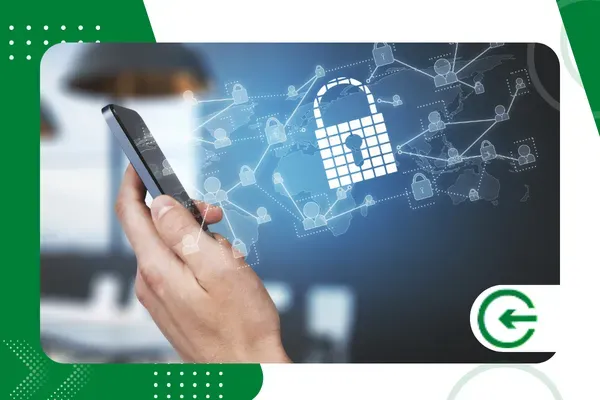
Personal protection has reached an impressive level of autonomy. Smartphones are now able to identify kinetic patterns from falls or collisions, initiating rescue protocols without the user even needing to touch the screen.
These safety alerts transmit your location via satellite in fractions of a second. In critical situations where the conventional network fails, this direct connectivity with low-Earth orbit constellations is what guarantees rescue.
In addition to physical integrity, smartphone smart alerts They protect your assets. The bank's anti-fraud system cross-references your biometrics with the location of the point-of-sale terminal in milliseconds.
Any attempt to transact outside your usual perimeter will block the payment and require proof of life.
It's a silent layer of security that makes the use of digital wallets much more resilient to modern scams.
The transformation of professional routines through AI.
At work, the cell phone has gone from being a distraction to a tool for managing workload. The system reads your calendar and suggests rest breaks based on the intensity of your previous meetings.
The device also helps manage travel. If there is an accident on your usual route, it will either trigger your alarm clock earlier or send an alert suggesting an alternative route, all autonomously and discreetly.
Use the smartphone smart alerts Managing deadlines is about delegating the anxiety to the machine. The system only notifies you about pending deliveries when you have free time to resolve them, avoiding unnecessary stress.
This technological proactivity allows the professional to focus on strategy, while the digital assistant takes care of time micromanagement. The result is a more fluid career, less burdened by technical details.
+ Benefits of digital platforms for small businesses
The future of interaction: Alerts without screens.
The trend for the coming years is the dematerialization of the interface. We are migrating to auditory and tactile alerts that don't require you to look at the device, allowing for a more genuine connection with the surrounding environment.
Artificial intelligence is becoming auditory. Notifications will be whispered contextually through smart headphones, filtering out noise and signal, keeping you informed without breaking eye contact with people.
You smartphone smart alerts They are moving towards being imperceptible. The success of technology will be measured not by how brightly it shines, but by how well it can solve problems without you even noticing its presence.
Staying up-to-date on these hardware protocols is essential. To understand the security standards governing these new systems, the IEEE Computer Society It has technical documentation on the evolution of mobile operating systems.
FAQ – Frequently Asked Questions
1. How does the system decide what is a priority?
Prioritization is based on your interaction history. If you respond quickly to certain people or use work apps at specific times, the smartphone smart alerts They understand these patterns and automatically increase the urgency of these events.
2. Does the constant use of sensors for alerts consume a lot of battery power?
Not anymore. The new processors have ultra-low power cores dedicated exclusively to sensor processing. This allows the phone to "monitor" its surroundings without draining the device's main power supply.
3. Can I trust health alerts for diagnoses?
They serve as preventative indicators and do not replace clinical examinations. However, they are extremely effective in alerting you to abnormal trends, allowing you to seek medical attention before a mild symptom becomes a serious problem.
4. Can smart alerts be intrusive?
The feeling of intrusion diminishes when you take control of the settings. The secret lies in training your device's AI: by manually silencing what bothers you, the system refines the filter and makes coexistence much more harmonious.
Reconfiguring your relationship with your smartphone involves understanding that it's a tool to help you, not to nag you.
By adjusting your alerts to your biological and professional rhythms, what was once a source of anxiety becomes the foundation of a much more organized routine.
The control is in your hands, but the execution should be delegated to the intelligence you carry in your pocket. Optimize your alerts today and reclaim the time that generic notifications used to steal from you.
