
The Evolution of QR Code: From Asia to the Western World

The evolution of the QR Code has redefined the way we interact with the digital world.
Adverts
Created in Japan in 1994 by Denso Wave, this two-dimensional code emerged as a solution for tracking components in the automotive industry.
However, its versatility has led it to expand rapidly, crossing borders and gaining global applications.
The Emergence in Japan and its Expansion throughout Asia
While traditional barcodes stored little data, the QR Code brought significantly higher capacity, allowing the storage of alphanumeric characters, bytes and kanji.
In Japan, its adoption was immediate in industry and, later, in the payments and advertising sector.
advertising
The efficiency of QR Code has become evident in logistics, allowing precise traceability of products and components.
This has reduced human error and increased operational efficiency across multiple supply chains.
As a result, companies began to realize its potential beyond the industry and began to expand its use.
Japan's increasing digitalization has facilitated the incorporation of QR Code into various sectors.
Companies have started using it to provide detailed information about products, create interactive experiences and improve communication with consumers.
This increased his popularity among the Japanese.
advantages of using QR Code
In addition to the commercial sector, the Japanese government also saw advantages in using QR Code.
Public services have started using them for digital identification, transport tickets and awareness campaigns.
This institutional adoption helped to further legitimize its presence in society.
Technological advances in Japan have also allowed QR Code to be integrated into augmented reality systems, providing immersive experiences.
Applications in museums, shopping malls and even education have begun to explore this functionality, making the code a powerful interactive resource.
China also drove the evolution of the QR Code.
Companies like WeChat Pay and Alipay have made cash a mainstream payment method, reducing reliance on physical cash and bank cards.
Currently, around 90% of Chinese consumers use QR Codes for financial transactions, according to a report by iResearch.
The popularization of QR Code in China is largely due to its role in financial inclusion.
Small merchants, who previously did not have access to traditional electronic payment systems, were able to adopt QR Codes to receive payments quickly and efficiently.
This democratization of digital payments helped to further foster its growth.
China's advanced technological infrastructure has enabled QR Codes to become even more deeply integrated into everyday life.
Use of QR Code
From public transportation to delivery services, technology has been widely adopted to ensure efficiency and convenience.
This acceptance consolidated the QR Code as an essential tool in the country.
In addition to payments, QR Codes in China have come to be used in government services, digital identification and even in healthcare systems.
Medical consultations, laboratory tests and prescriptions are now linked to codes, facilitating the organization and access to information in a safe and efficient manner.
In the education sector, China innovated by using QR Codes in teaching materials and school interactions.
Students can access digital content instantly, and teachers can monitor activities through technology.
This represents a significant advance in the modernization of education.

The Arrival in the West and the Resumption During the Pandemic
Initially, the evolution of QR Code in the West was slower due to the lack of native support on smartphones and the consolidated use of other payment methods.
However, the COVID-19 pandemic changed this scenario.
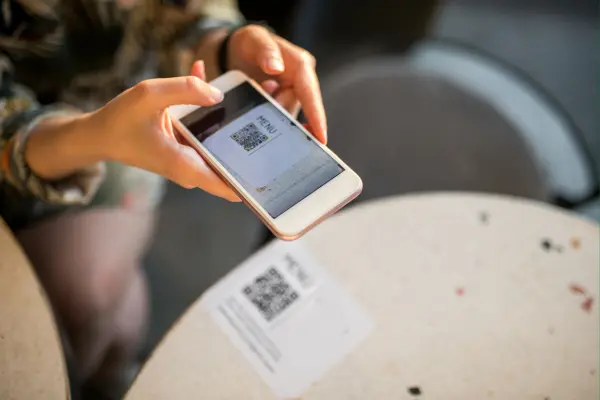
Social distancing has driven the use of code for digital menus, check-ins and contactless payments.
The need for touchless solutions has brought to light the usefulness of QR Codes in several areas, especially in retail and hospitality.
Restaurants began using them so that customers could access menus without the need for physical interaction.
This generated great support, showing that the technology could go beyond traditional applications.
+ The Barcode: Who invented it and how does it transform our shopping?
QR Code growth
E-commerce has also benefited from the growth of QR Code.
Companies have started including these codes on packaging to offer customer support, provide detailed information, and even create more immersive shopping experiences.
This adoption helped to strengthen the presence of QR Code in the West.
Companies like Google and Apple have incorporated QR Code reading directly into their devices' cameras, making their adoption more fluid.
Restaurants, cinemas and public transport began to use them widely, consolidating their relevance in the Western market.
In addition to essential services, digital advertising in the West has also begun to incorporate QR Codes into interactive campaigns.
Brands realized they could connect physical ads to digital content, providing a richer consumer experience.
This approach helped drive the use of technology.
The digitalization of public services in the West has also found a strategic ally in the QR Code.
Governments have started using it for electronic documents, controlling access to events and even validating vaccination certificates.
This expansion further solidified its presence in society.
Therefore, in addition to the public sector, educational and cultural institutions in the West have started using QR Codes in innovative initiatives.
Museums and universities have embraced technology to enhance the experience for visitors and students, making learning more interactive and accessible.
The growing integration of QR Code with the Internet of Things (IoT) in the West has opened up new possibilities for home and business automation.
Technology companies are exploring ways to connect devices and systems through QR Codes, optimizing processes and increasing operational efficiency.
See too: VPNs: How They Work and Why They're Essential for Your Privacy
Modern Applications and Future Trends
The evolution of the QR Code has not stopped.
Today, they use it to authenticate logins, electronic tickets, marketing campaigns and even in healthcare, to track vaccinations and medical exams.
The digital security sector has been exploring QR Code to improve authentication in critical systems.
Therefore, combined with advanced encryption, these codes ensure that only authorized users can access certain services, increasing protection against fraud and unauthorized access.
The educational and cultural sectors have also adopted the QR Code as an interactive tool.
Museums and educational institutions use technology to offer detailed information about works of art and educational content, enriching the user experience.
With the advancement of blockchain technology, QR Codes are being integrated into smart contracts, increasing security in digital transactions.
Furthermore, its fusion with augmented reality promises new interactions, making the user experience even more immersive.
Entertainment companies have been experimenting with the use of QR Codes in events and live broadcasts, offering interactive and gamified experiences for the audience.
This type of innovation has the potential to revolutionize the way audiences interact with digital and physical content at the same time.
The trend is for the QR Code to continue evolving with new features and innovative applications.
With the increasing adoption of the Internet of Things (IoT), these codes are expected to be used to connect devices more efficiently, becoming even more present in everyday life.
