
How mobile multiplayer games are changing online fun
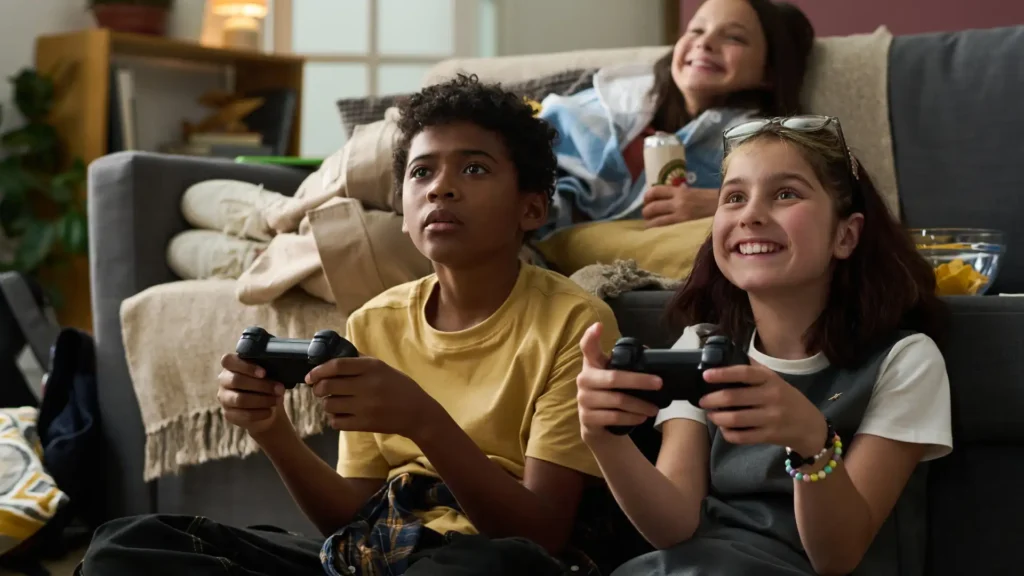
You mobile multiplayer games They've gone from being just an escape from boredom in bank queues to becoming the center of gravity of pop culture in 2026.
Adverts
The idea that the mobile phone is a "lesser" platform has evaporated in the face of ecosystems that blend fierce competition and social interaction, uniting billions of people in an infrastructure that, honestly, puts many public connectivity services to shame.
This change is not just technical, it's behavioral. We are redesigning the way we consume entertainment, transforming the act of "gaming" into a collective experience that ignores geographical boundaries and, above all, the old financial barriers that separated the elite gamer from the casual gamer.
In this guide, we delve into the architecture of this revolution. We'll analyze everything from the importance of low-latency networks to the psychology behind the new digital communities that are shaping the near future of entertainment.
Navigation Summary
- The Death of Barriers: Hardware, 5G, and the Cloud
- Identity and Belonging: The Game as a Public Square
- The Algorithmic Frontier: AI and the End of Predictable Matches
- Market X-ray: Numbers that Explain the Phenomenon
- Frequently Asked Questions (FAQ)
How have mobile multiplayer games democratized access to entertainment?
The real victory of smartphones was not their processing power, but the dismantling of technological elitism.
advertising
A decade ago, high-fidelity competitive gaming required a hardware investment that few people could afford.
Today, the scenario is different: the mobile multiplayer games They run smoothly on devices that cost a fraction of a next-generation console.
This accessibility has created a curious phenomenon: the end of "ghettos" for gamers.
The model Free-to-PlayOnce viewed with suspicion for being predatory, it has matured into a system focused on personalization, where the player's wallet doesn't dictate who wins the match.
What matters now is reflexes and strategy, restoring the game to its purest character of digital meritocracy.
It's fascinating to observe how this economic opening has integrated the Global South into the eSports map.
Regions that were once mere spectators are now dictating the pace of the meta-game, proving that when you give a powerful tool to those with talent and connection, the result is an unprecedented explosion of creativity and competitiveness.
What are the main technological trends for 2026?
If you enter a high-level match today, you're hardly playing against a pre-programmed script. By 2026, Generative AI is deeply ingrained in the game. mobile multiplayer games, creating environments that breathe and react.
NPCs have gone from being mere "posts" with repetitive dialogue to becoming dynamic agents, capable of remembering your choices and altering the balance of the virtual world in real time.
The barrier of physical hardware has finally become irrelevant; heavy processing happens on remote servers, delivering a cinematic visual experience in the palm of your hand, regardless of whether your phone is the latest model or a version from three generations ago.
There's something almost surreal about seeing how Augmented Reality (AR) has gone from being a marketing gimmick to becoming a game mechanic.
Streets and squares became extensions of the servers, forcing a physical interaction that the industry had been trying to achieve for years.
As points out Fortune Business InsightsWe are not just witnessing financial growth, but a complete occupation of urban space by play.
Why has online entertainment become so dependent on social interaction?
Nobody enters a game anymore just to "beat" something. The current appeal of mobile multiplayer games It lies in its ability to simulate — and sometimes surpass — the human connection of traditional social networks.
The lobby of a match has become the new shopping center, the new town square, where people gather to chat, show off their achievements and, eventually, compete.
The dynamic has changed: the isolation of solo campaigns has given way to the euphoria of clans. There is a sense of collective responsibility in these communities that keeps the player engaged for months, or even years.
Simultaneous voice translation broke down the last existing barrier, allowing a player in São Paulo to coordinate a complex strategy with someone in Tokyo without linguistic friction.
This reliance on social media creates an ecosystem where digital reputation is worth its weight in gold. It's not just about experience points, but about how you are perceived by your group.
Modern entertainment is a living organism that feeds on conversations, partnerships, and, of course, that healthy rivalry that only the mobile environment, with its omnipresence, can sustain 24 hours a day.
+ Storytelling apps with interactive features
Which brands and regions lead the mobile multiplayer gaming market?
The power axis of the industry has shifted. Although the United States and Europe still produce major IPs, the beating heart of consumption of mobile multiplayer games It is located in the East and in emerging markets.
Companies like Tencent and Sony have recalibrated their strategies to meet massive demand from India and Latin America, where mobile phones are the primary (and often only) device for accessing the internet.
The numbers for 2026 show an undeniable reality: mobile is no longer a "segment" of the market, it is the market.
The professionalization of tournaments on small screens has reached audience levels that rival traditional sports, attracting sponsorships from sectors that previously ignored the gaming universe.
+ Apps for interacting with celebrities and influencers.
Overview of the Mobile Market (Projections 2026)
| Region / Segment | Market Value (Estimated) | Annual Growth Rate (CAGR) | Main Driver of Consumption |
| Asia (China/India) | US$ 38.5 Billion | 12,4% | Population Density and 5G |
| Latin America | US$ 9.07 Billion | 9,4% | Popularization of Gaming Smartphones |
| Cloud Gaming Mobile | US$ 15.2 Billion | 21,8% | Democratization of Processing |
| Mobile eSports | US$ 4.5 Billion | 15,1% | Broadcasts via Social Networks |
How has consumer behavior changed with mobile multiplayer games?
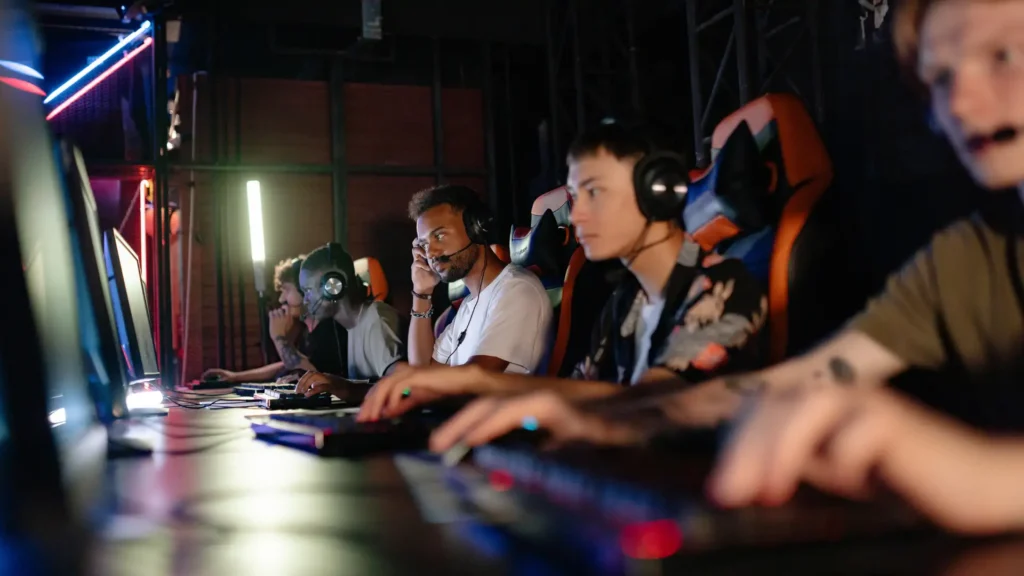
Our relationship with time has been altered by the convenience of mobile multiplayer gamesThe concept of "sitting down to play" has been replaced by "playing while living".
This fragmentation of experience has transformed small intervals of daily life into windows of intense social and competitive activity, creating a new type of consumer: the high-frequency gamer.
This profile no longer accepts static content. It requires the game to evolve week after week, with seasonal events that reflect what is happening in the real world.
The expectation of ongoing support has forced developers to become service companies, where the game's release is just the first day of a dialogue that can last a decade.
The most interesting thing is the breakdown of the walls between systems. cross-play It has ceased to be a differentiating factor and has become an ethical obligation for brands.
If you can't play with your friend because they use a different operating system, the game has failed in its social mission.
This demand for full integration reflects a growing desire for a digital ecosystem without constraints.
+ Virtual party apps and interactive live streams
What is the role of security and ethics in modern mobile gaming?
Managing communities of billions of people requires more than just powerful servers; it demands a clear moral compass.
You mobile multiplayer games As of 2026, they operate under the watchful eye of moderation systems that use machine learning to filter out toxicity before it even reaches the chat.
Anonymity still exists, but impunity for abusive behavior is coming to an end.
There is also a deep discussion about the internal economy of these games. Transparency in the chances of winning rare items and protection against impulsive spending have become market standards, often due to pressure from the players themselves.
It's an industry that is learning, sometimes the hard way, that long-term sustainability depends on the mental and financial health of its user base.
Digital well-being tools, once seen as intrusive, are now celebrated. They help keep enjoyment within healthy limits by suggesting breaks and monitoring screen time.
Ultimately, for the ecosystem to continue thriving, the player needs to be doing well both inside and outside the servers.
The omnipresence of mobile multiplayer games The future of 2026 reflects a society that seeks constant connection, but doesn't want to sacrifice practicality.
What began as a simple form of portable entertainment has evolved into a complex cultural infrastructure, where technology serves the most human purpose of all: the sharing of experiences.
We are experiencing the peak of a transition where the "virtual" and the "real" are no longer separate worlds, but overlapping layers of our routine.
If you want to understand where technology is going, don't look at the laboratories; look at the cell phone screen of the person next to you on the subway.
For a technical and detailed overview of how graphics engines are supporting this growth, it's worth checking out the annual report from... Unity Technologies, which dissects the innovations that allow such vast worlds to fit in our pockets.
Frequently Asked Questions (FAQ)
1. Is phone performance still a problem for demanding games?
Less and less. With the advancement of Cloud Gaming, processing happens in the cloud, allowing even mid-range phones to run titles with cutting-edge graphics without overheating.
2. How does 5G impact casual gamers?
The difference lies in stability. In addition to instant downloads, 5G eliminates those annoying "freezes" in crowded places, ensuring that your game doesn't drop in the middle of a crucial moment.
3. Is there a healthy limit to mobile gaming time?
Yes, and most modern games already include systems that alert the user about their playing time. Balance is key to ensuring that fun doesn't become an obligation or an addiction.
4. Is cross-play between mobile and console fair?
The developers use intelligent matchmaking systems. If you're on mobile, the system prioritizes matching you against other mobile players or adjusts aim assist to level the playing field against those using a mouse or controller.
