
Editing photos with fake depth on your smartphone.
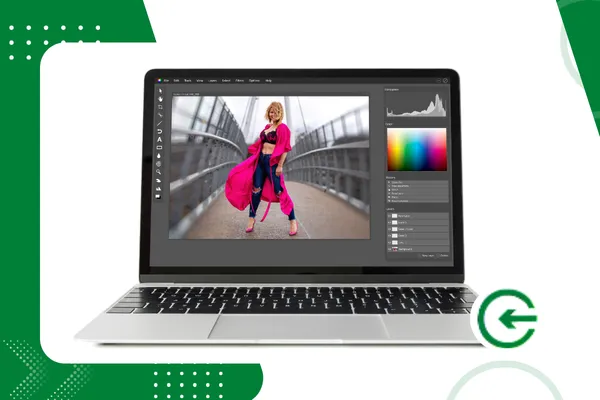
Mastering Photo editing with fake depth It transformed mobile photography in 2026, allowing the modest sensors of smartphones to finally face off against the professional lenses that have always dominated the market due to their weight and price.
Adverts
This evolution is not merely aesthetic; it's about how artificial intelligence algorithms and depth maps now work in symbiosis to isolate objects with near-surgical precision, raising the level of your posts.
In this guide, we'll dissect strategies for adjusting blur, filter out the best software, and understand why computational photography has gone from being a "cheap trick" to an indispensable visual storytelling tool.
Summary
- The evolution of hardware and software in 2026
- How does the depth map work?
- Leading apps for realistic blurring.
- Comparative table: Sensors vs. Algorithms
- Practical tips to avoid artificial edges
- FAQ: Frequently Asked Questions
How has technology changed photo editing with fake depth?
We reach a point of maturity in 2026 where the barrier between the physical glass of an f/1.4 lens and digital processing becomes almost invisible to anyone who doesn't use a magnifying glass.
State-of-the-art devices use LiDAR to map the environment in fractions of a second, creating the perfect foundation for a photo editing with fake depth that doesn't scream "artificial".
advertising
The big leap forward this year was the introduction of "Optical Granularity," a technology that simulates those charming little imperfections of vintage lenses, preventing the background from looking like just a smooth digital blur.
Unlike the frustrating attempts of years past, current processors easily identify hair strands and transparencies in glass, preventing the depth effect from devouring essential parts of its composition.
Where can I find the best tools for digital depth?
To achieve results that fool even trained eyes, the first step is to abandon the native and generic filters that come pre-installed on your device, seeking more in-depth and manual solutions.
Apps like Focos and Lightroom Mobile continue to set the pace, but now allow granular control of the focus plane, letting you decide exactly where the sharpness ends.
THE photo editing with fake depth It requires a close look at the concept of "fall-off," which is that smooth—and often misinterpreted—transition between what is in focus and the background.
Whenever possible, prioritize tools that accept RAW files, as they retain valuable metadata that allows you to manipulate distance layers without the final image disintegrating into noise.
What are the techniques for achieving a natural bokeh effect in 2026?
The secret to a convincing blur lies in the light; photos with bright points in the background generate bokeh discs that give that cinematic look we all seek in a well-executed portrait.
Give your subject space. Physics hasn't changed: the greater the distance between the person and the background, the easier it is for the subject to... photo editing with fake depth create believable layers.
There's something unsettling about photos with excessive blur; generally, reducing the intensity of the effect in 15% or 20% brings a naturalness that automatic adjustments simply can't deliver on their own.
+ Retro-style digital photos: current apps and techniques
Performance Comparison: Hardware vs. Software
Many users are unaware that the success of the edit depends directly on how the data was collected at the time of the click, as demonstrated by the most recent laboratory tests conducted this year.
+ How to apply professional color grading to your cell phone easily.
| Sensor Type | Edge Error (Average) | Depth Support | Battery Consumption |
| LiDAR / ToF 4.0 | 0.8% | Native and Dynamic | Moderate |
| Dual Pixel AF | 3.5% | Estimated by Software | Low |
| Single Sensor (AI) | 7.2% | Neural Reconstruction | High |
When does artificial blur surpass native portrait mode?
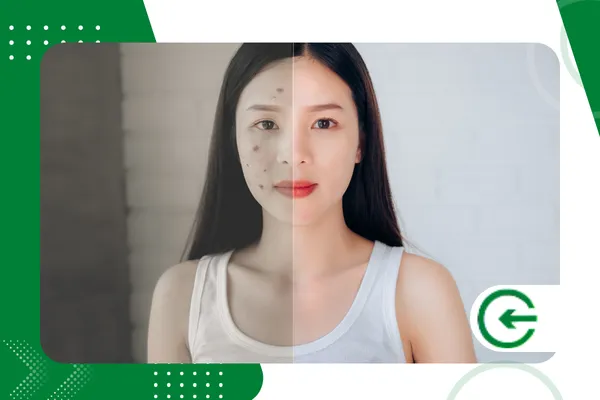
The automatic portrait mode is often lazy, applying a flat blur to everything that isn't the main subject, ignoring the nuances of distance that exist in a real-world scene.
THE photo editing with fake depth Manually creating a blur allows you to distribute the intensity of the blur, respecting the logic that objects closer to the focus should be less blurred than the horizon.
Use the adjustment brushes to rescue areas that artificial intelligence often ignores, such as the gaps between arms or the details of small accessories that end up lost in the digital fog.
Adjusting the background color temperature separately also creates an interesting contrast, making the subject "pop" out of the image harmoniously, without looking like a cutout pasted onto another photo.
Why does lighting influence the quality of the blur?
Tiny smartphone pixels suffer in dark environments, generating noise that confuses separation algorithms, resulting in those "chewed" edges that ruin any attempt at professional post-processing.
A well-lit scene offers sharp contrasts, which is "manna" for the photo editing with fake depthdelivering a clean cutout that requires almost no manual correction effort afterward.
If you are photographing indoors, look for side lighting to create a clear outline on the subject, serving as a visual map for the software to understand exactly where the skin ends and the background begins.
Depth of field should be viewed as a directing tool; use it to eliminate visual background noise and focus the viewer's attention on what truly matters in your narrative.
+ How to use generative AI in photos to create realistic scenarios.
How to edit photos without losing aesthetic authority?
Maintaining a restrained approach is what separates an enthusiastic photographer from an amateur who has just discovered sliders. Ironically, excessive editing is what most clearly reveals a lack of technique.
THE photo editing with fake depth It should be treated like a spice: essential for the final flavor, but disastrous if used excessively, masking reality instead of simply enhancing it.
Observe the work of great masters of classical photography to understand how focus behaves in real life; this visual library will guide your hand as you slide your finger across the screen.
To understand how tech giants are shaping our visual perception, it's worth following updates from... Google Photography, where the science behind each pixel is rigorously explained.
Mobile photography in 2026 proved that talent and mastery of the right tools outweigh the need to carry kilos of glass and metal in a heavy backpack.
By applying these depth techniques with discernment and sensitivity, you ensure that your visual output is not just "another photo," but a piece of design thoughtfully conceived and executed with excellence.
Treat technology as an extension of your artistic vision; after all, the software provides the means, but it is your perspective that defines where the beauty should truly be focused.
Experimentation is the only path to technical perfection, so keep testing limits and software until your visual identity becomes unmistakable in this ocean of digital images.
FAQ: Frequently Asked Questions
What's the best app for fake depth in 2026?
Focos Pro and Adobe Lightroom remain unbeatable, especially for their ability to readjust the focus point even after the photo has been saved to the gallery.
Can I add blur to old photos?
Yes, current neural networks can analyze two-dimensional images and estimate a depth map, although the result is superior in photos taken with modern LiDAR sensors.
Does the fake depth effect reduce the photo resolution?
Not necessarily. If you use high-performance applications, the processing occurs via layers, maintaining the integrity of the pixels of the focused object and exporting at maximum resolution.
Are photos with fake depth of field accepted in stock photo libraries?
Yes, as long as the processing is invisible. The golden rule is that the image should not show "halos" or cropping errors that reveal crude digital manipulation.
