
How to securely share your real-time location
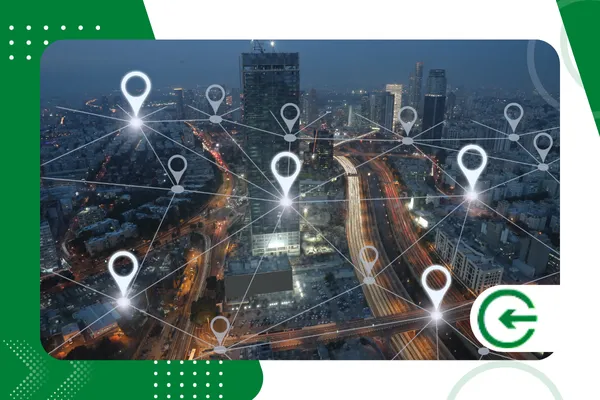
Do you know that feeling of peace when you let a friend or family member know you're on your way and they can follow your journey?
Adverts
Or the peace of mind of knowing that your child arrived safely at their friend's house? Share your real-time location securely. It's a powerful tool, but it requires care and knowledge to avoid becoming an unnecessary exposure.
In a world where geolocation is present in almost every application, from maps to social networks, understanding the risks and best practices is fundamental.
It's not just about pressing a button, but about creating a "treasure map" for the right people, at the right time, and without leaving a trace for those who shouldn't see it.
This guide goes beyond the basics and delves into the details that make the difference between a safe experience and a digital hazard.
advertising
Summary
- Why Sharing Your Location Is Essential (and Hidden Risks)
- The Right Tools for the Right Task
- The Golden Rule: The Circle of Trust
- Comparative Table: Sharing Features
- Practical Tips for Maximum Security
- Conclusion: A GPS for Trust
- Frequently Asked Questions
1. Why Sharing Your Location Is Essential (and Hidden Risks)
The act of sharing one's location is, in essence, a demonstration of care and trust.
Think of the peace of mind a father feels knowing his daughter has gotten into college, or the convenience of a couple meeting in a crowded shopping mall.
Real-time geolocation is a natural evolution of "call me when you arrive" – a technological advancement that brings us closer and offers an extra layer of security.
However, this convenience comes at a price. Undue exposure can open doors to risks such as stalking, premeditated robberies, or even the theft of personal data.
A 2023 study by KasperskyFor example, it points out that geolocation is one of the most sensitive pieces of information that people share, and that many are unaware of how easily this data can be intercepted if proper precautions are not taken.
The problem is not the tool, but the lack of control over it.
+ What is cloud storage and why it's worth more than an SD card?
2. The Right Tools for the Right Task
There is no single magic tool for Share your real-time location securely.The choice of app depends on your needs and the level of security you want.
Messaging apps (WhatsApp and Telegram)
These are the most popular ones for everyday use. They are practical, since most people use them.
WhatsApp, for example, allows you to share your location for 15 minutes, 1 hour, or 8 hours.
The big difference is... end-to-end encryptionThis means that only the sender and recipient can see the location.
The time limit is a security advantage because it prevents the location from being exposed indefinitely.
Map applications (Google Maps and Apple Maps)
These apps are ideal for long-term monitoring, such as for parents tracking their children's movements.
Google Maps, for example, offers the option to share your location for a fixed period or "until you turn it off".
Although convenient, this "until you disable it" option requires extra care from the user, who needs to remember to disable the feature to avoid being exposed.
+ How to quickly scan documents using free apps
Dedicated Applications (Life360 and Find My)
These apps were created primarily for tracking purposes. Life360For example, it allows you to create "circles" of trust (family, friends) and monitor the location of all members.
It's robust, but its intrusive nature can be a point of friction in relationships. Apple's "Find My" is a native and excellent tool for those within the iOS ecosystem.
It is extremely reliable and secure, even allowing you to find offline devices.
3. The Golden Rule: The Circle of Trust

The foundation of any secure sharing is... Circle of TrustShare your location only with people you fully trust.
This may seem obvious, but many people share their whereabouts with acquaintances or, worse, in large groups, exposing themselves to unnecessary risks.
Psychologist and digital security expert, Dr. Ana Paula Santos, emphasizes that "the greatest risk is not the technology itself, but the lack of discernment about who is being shared with."
A location 'for everyone' is information for 'no one'.
+ The Best Offline GPS Available For Download!
4. Comparative Table: Sharing Resources
| Resource | Security Level | Practicality | Ideal Use |
| WhatsApp/Telegram | High (cryptography) | Very High | Diary, quick encounters |
| Google Maps/Apple Maps | Medium (needs attention) | High | Long-term tracking |
| Life360/Find My | Very High | Average | Family, constant monitoring |
5. Practical Tips for Maximum Security
- Set a deadline: Never share your location indefinitely. Always use the time-limited option to prevent it from being accidentally activated.
- Manually select the contacts: Even in groups, choose the option to share only with specific people, not with the entire group.
- Disable sharing after use: Make it a habit to disable sharing as soon as you arrive at your destination. It's a simple step that makes all the difference.
- Manage app permissions: Periodically check which apps have access to your location and disable access for those that don't need it. A flashlight app doesn't need to know where you are.
- Use VPNs (Virtual Private Networks): For an extra layer of security, especially on public Wi-Fi networks, a VPN It can mask your location, making it more difficult for third parties to track you.
Conclusion
Share your real-time location securely. It is a tool for empowerment and peace of mind.
It's about being in control, not being controlled. By following safety practices, such as setting deadlines, choosing the right people, and managing permissions, you transform a potentially dangerous technology into a powerful ally.
Digital security is an ongoing journey, and the first step is always the most important.
Frequently Asked Questions
1. What is end-to-end encryption and why is it important for location sharing?
End-to-end encryption ensures that data, including your location, is converted into an unreadable code. Only the sender and recipient have the "key" to decrypt the message. This prevents intermediaries, such as your internet provider or the application itself, from seeing the information, guaranteeing your privacy and security.
2. Can I be tracked even if my cell phone's GPS is turned off?
Yes, it's possible. Your cell phone can be located through cell towers (triangulation) or Wi-Fi networks. While GPS is the most accurate method, it's not the only one. That's why it's crucial to manage app permissions and be aware of the risks, even with GPS disabled.
3. Does real-time location sharing consume a lot of battery?
Yes, GPS is one of the components that consumes the most battery power in a smartphone. Prolonged use for location sharing can significantly impact your device's battery life. Therefore, time-limited options are a good practice, both for security and energy conservation.
