
Sustainable transportation apps: bicycles and electric scooters
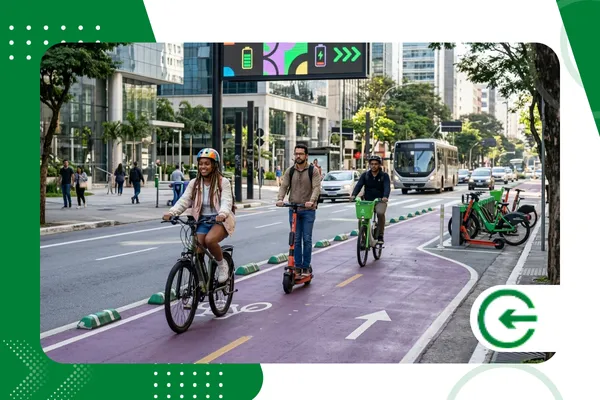
You sustainable transportation apps They've gone from being a futuristic promise to occupying the center of Brazilian urban life in 2026.
ADVERTISING
Technological integration now allows anyone to connect different modes of transport with just a few taps on the screen, a change that goes far beyond convenience: it represents a necessary break from the combustion engine and the rigid logic of transportation we inherited from the last century.
In this guide, we delve into the reality of electric micromobility, analyzing platforms, the rules that truly matter, and how this affects your wallet.
The sharing of light vehicles is no longer a startup "experiment," but the cornerstone of an infrastructure that finally attempts to prioritize citizens' time and the quality of the air we breathe in increasingly dense cities.
Summary of Contents:
advertising
- The landscape of electric micromobility in 2026.
- What are the best apps for bicycles and scooters?
- CONTRAN rules: What you need to know to drive.
- Comparative table of sustainable modes of transport.
- Economic and environmental impact on daily life.
- FAQ: Frequently asked questions about using sustainable apps.
How do sustainable transportation apps work in practice?
At our fingertips, what we see is a dotted map of icons, but behind the interface of... sustainable transportation apps It operates a complex mechanism of shared economy and IoT.
The user locates the nearest unit, points the camera at the QR code, and in seconds, the physical lock releases the movement, allowing the journey to begin without the bureaucratic hassles of traditional transportation.
Pricing has matured and today blends an activation fee with per-minute charges, giving the user the power to pay exactly for what they consume.
Note that “virtual docks” — areas delimited by geofencing — will become the norm by 2026; parking correctly is not just a matter of urban etiquette, but generates credits that make the next trip almost symbolic in terms of cost.
This system resolves that irritating "last mile" gap, connecting the subway to the office without you having to walk in the scorching sun or rely on taxis for ridiculous distances. It's a quieter and more elegant way to coexist.
When we replace a two-ton SUV with a twenty-kilogram scooter to cross ten blocks, the logic of the city begins to make sense.
The Revolution in Your Pocket: The End of the Car as the Protagonist
Migration to sustainable transportation apps This represents immediate financial relief for the household budget.
Owning a car in 2026 requires dealing with a cascade of fixed costs that often exceed the asset's value in use, making it a heavy and inefficient liability.
By replacing loan installments, insurance, and vehicle tax with on-demand payments, the user regains control over their capital.
Studies on urban mobility show that replacing short trips with electric vehicles can reduce monthly commuting expenses by up to 60%, leaving more money for personal investments.
This economy extends to invisible infrastructure, such as the astronomical prices charged for parking in shopping malls.
With micromobility, you eliminate the "parking space rental" fee, parking for free and in a regulated manner at virtual docks, optimizing every penny invested in your daily commute.
+ Parental control apps for digital security
What are the best app options in 2026?
The Brazilian market has undergone a rigorous screening process in recent years, resulting in more robust and less adventurous operators.
Giants like Tembici have consolidated their presence, while Uber has definitively integrated third-party fleets into its ecosystem.
Those sustainable transportation apps They now offer equipment with solid-state batteries, which charge faster and last much longer, reducing "vehicle downtime" for maintenance.
Often, the best strategy is not to be loyal to a single app, but to use Mobility as a Service (MaaS) aggregators.
These platforms function like an urban brain: you tell them where you want to go, and they calculate whether it's more worthwhile to take a bus and finish the journey by bike, or if a direct scooter ride solves the problem before the next meeting starts.
The smart choice in 2026 is subscription plans. If you use the service more than three times a week, paying for it one-off is a financial mistake.
Monthly passes allow unlimited travel for up to 45 minutes, which, in practice, eliminates your worry about the timer and transforms the mode of transport into a natural extension of your own body in traffic.
+ School calendar apps for students and parents
Comparison of Micromobility Vehicles (Data 2026)
| Vehicle Type | Maximum Speed | Does it require a driver's license? | Circulation | Main Advantage |
| Electric Bicycle | 32 km/h | No | Bike paths/Streets | Comfort on uphill climbs |
| Electric Scooter | 20 km/h | No | Bike paths | Full portability |
| Self-propelled | 32 km/h | No | Bike paths | Urban agility |
| Electric Moped | 50 km/h | Yes (ACC/A) | Side lanes | Superior autonomy |
Where is it permitted to ride bicycles and electric scooters?
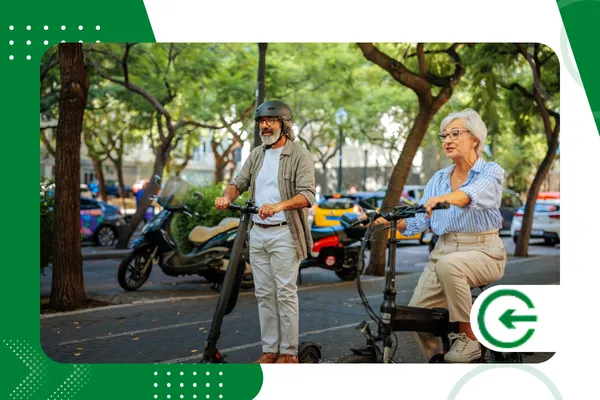
If you need to use the sidewalk, the rule is clear and physical: the speed must be reduced to 6 km/h, prioritizing pedestrians, under penalty of account blocking by the vehicle's software.
On roads where the bike lane markings haven't yet been applied, riders should stay on the edges of the road, following the flow of traffic. Avoid riding against the flow of traffic—a common mistake that generates avoidable statistics.
Mandatory equipment such as doorbells and rearview mirrors now come standard on all shared models, ensuring you are seen and heard in the metropolitan chaos.
There is something educational about this new system. Cities that have created low-speed zones in shopping centers have realized that local commerce flourishes when people are not locked behind tinted windows.
By using these services, you signal to public authorities that the demand for space for people is greater than the demand for space to park cars.
The numbers add up quickly when we put our egos aside. Owning a car in 2026 involves a cascade of costs: insurance, vehicle tax, fluctuating fuel prices, and the absurd cost per square meter for parking.
By adopting the sustainable transportation apps For everyday commutes, the real savings can exceed 60%, freeing up budget space for investments or quality leisure.
Beyond the monetary gain, there's the advantage of saving time, the scarcest currency of the decade. While traffic flirts with stagnation, those who cycle or glide on a scooter maintain a constant average speed.
This predictability eliminates the stress of "being late because of traffic jams," something that is often misinterpreted as inevitable, but which is actually a modal choice.
Leading companies have already replaced fuel vouchers with micromobility credits. This isn't just "greenwashing"; it's a productivity strategy.
An employee who arrives at work after an active commute is more alert and less exhausted than one who has endured an hour of stop-and-go traffic in a crowded bus corridor or a congested tunnel.
How can I ensure my safety when using these services?
Technology plays its part, but the human factor remains the most sensitive link. Before stepping onto the equipment offered by... sustainable transportation appsSpend ten seconds checking the obvious: Do the brake levers respond? Are the tires firm?
A shared vehicle passes through many hands and, although maintenance is frequent, the user is the final line of inspection before use.
The helmet remains the best friend of those who value safety, even where the law is lenient. Another crucial point: disconnect.
Using noise-canceling headphones while riding a scooter is like blinding yourself to your surroundings.
Traffic is a conversation of sounds and signals; you need to hear an approaching engine or a pedestrian's voice to react in time.
Signal with your arms, stay focused, and above all, don't try to "win" against larger vehicles. The agility of micromobility should be used to move smoothly, not to compete for space.
Road safety in 2026 depends on the understanding that we are all part of a system, and the smaller should always be protected by the larger, but must act with the prudence of someone who is vulnerable.
+ Social media management apps for influencers
Final Reflection
The popularization of sustainable transportation apps It's not just a change of habit, but a pragmatic response to the collapse of the road-centric model.
By choosing between pedaling or an electric motor, you stop being part of the traffic problem and become part of the urban solution. It's a silent freedom that transforms the perception of the city, making it less hostile and much more human.
The trend is for these systems to become even more invisible and ubiquitous, integrating organically into street furniture.
To keep up with the technical developments and new guidelines for electrification in Brazil, it is worthwhile to follow the reports from... Brazilian Electric Vehicle Association (ABVE)which details how the country is moving away from oil.
FAQ: Frequently Asked Questions
Do I need a driver's license to drive an electric scooter?
No. If the equipment is low-powered and respects the speed limits of urban roads, you don't need a license, just common sense and respect for traffic regulations.
Can the app fine me if I park illegally?
Yes. The geolocation system identifies if the vehicle has been abandoned in the middle of the sidewalk. In 2026, administrative fines will be applied directly to the user's bill to educate about the use of public space.
Is it safe to ride an electric bike in the rain?
The components are sealed and durable, but the physics remain the same: the asphalt becomes slippery and braking takes longer. If the rain is torrential, it's best to find a covered mode of transport and wait for the weather to clear up.
Can I bring a companion on the scooter?
Never. Ride-sharing scooters are designed for individual use. The extra weight destabilizes the vehicle and seriously compromises the efficiency of the brakes, being the main cause of avoidable incidents.
