
NFC technology on mobile phones: uses beyond payments.
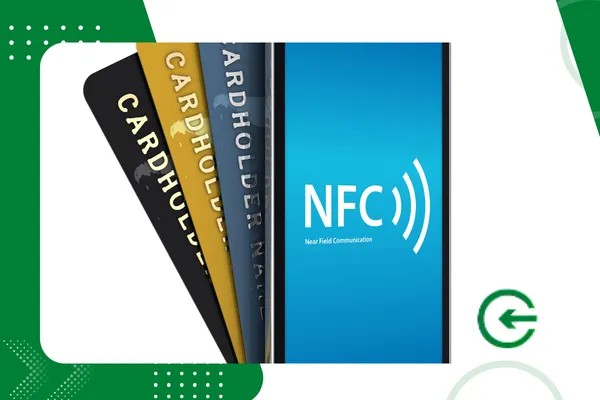
THE NFC technology on mobile phones It revolutionized the way we encounter physical matter in our daily lives, leaving far behind the rigid use of vending machines that everyone is already familiar with.
Adverts
This near-field communication, which operates in the silence of magnetic induction, creates instantaneous bridges between the silicon of the device and the real world, transforming the smartphone into a kind of Swiss Army knife for urban life.
In this digital age we are experiencing, the paranoid pursuit of time optimization and information security has reached a new level.
More observant users have begun to realize that carrying cutting-edge hardware in their pocket just to make Pix payments or go through the supermarket checkout is underutilizing brilliant engineering.
This guide unveils the dormant potential of this invisible connectivity, without theoretical embellishments, getting straight to what matters in real-life situations.
advertising
If you want to stop using your phone halfway, browse the topics below to understand how this mechanism works, moving beyond the usual clichés:
- The subtle technical evolution behind the proximity chip;
- Home automation without relying on voice assistants;
- Exploring public transportation and overcoming corporate barriers;
- The end of paper: business cards and experiential marketing;
- The stark truth about safety and efficiency (Table);
- Direct answers to demystify daily use.
What is NFC technology and how has it evolved?
Forget the almost automatic association with virtual credit cards. The heart of NFC technology in mobile phones It pulsates through electromagnetic waves that require extreme physical proximity, which, ironically, is its greatest virtue.
This barrier of just a few centimeters is not a technical limitation; it is the most effective shield ever designed against long-range pirate interceptions.
Some people believe that keeping this feature enabled destroys battery life, a myth inherited from the early days of Bluetooth.
The semiconductor industry has refined these components so much that today the chip operates in a near-hibernation state, only waking up when triggered by smart tags stuck to the wall or on products.
Unlike traditional wireless connections, which require that annoying choreography of pairing, device discovery, and typing codes, here validation happens in a snap.
This zero-friction feature has shifted the focus of software developers, who have come to see the feature as the master key to decentralized biometric security systems and applied biometrics.
How can I use this feature for home automation and routines?
Spreading programmable physical tags around the house is the kind of inexpensive sophistication that is often misinterpreted as a mere whim of tech enthusiasts.
In practice, sticking a tiny sticker on the headboard of your bed means silencing the world: simply place the device there to activate night mode, set alarms, and turn off the lights all at once.
In the corporate environment, the logic is identical for those who need to switch between digital personas throughout the day.
Focused professionals leave a configured stamp on their work desk; when they bring the device close, the notification volume changes and productivity tools open automatically, creating a psychological and mechanical rite of passage.
Inflection point: Unlike voice commands processed by large corporations, these routines run strictly locally within the operating system, shielding your home habits from external servers and prying eyes.
Integrating this ecosystem with smart light bulbs or thermostats solves the Achilles' heel of connected homes: the annoying need to open three different apps to adjust the temperature or brightness of the room.
Centralizing complex commands on physical surfaces brings back to the home the simplicity that technology itself sometimes tries to steal.
What are the applications in public transportation and access control?
The turnstiles in major global metropolises serve as the perfect laboratory for stress-testing this large-scale radio frequency engineering.
The gradual replacement of paper tickets and disposable plastic cards with credentials embedded in smartphone screens is not only an ecological choice, but a necessity for urban flow.
Corporate security followed the same path, replacing traditional ID badges with encrypted keys stored in the deepest parts of mobile phone hardware.
Employees of large corporations use the NFC technology in mobile phones to unlock high-security doors, private elevators, and even the release of confidential documents on network printers.
For those more skeptical who require an understanding of the governance behind these invisible validations, the industry-grade specifications and new global parameters for secure connectivity are documented in the repository of NFC Forum, the entity that dictates the rules of the game globally.
The great advantage of this international standardization is interoperability: the exact smartphone that opens the door to an office in São Paulo is capable of validating access to the London or New York subway without any hiccups or software incompatibilities.
How do data sharing and marketing utilize this system?
The classic paper business card has become an expensive museum piece and is inefficient in dynamic networking events.
Entrepreneurs and executives now carry rigid business cards equipped with internal chips; a tap on the other person's phone and their entire portfolio, professional links, and contact numbers appear cleanly on the screen.
In retail and cultural spaces, experiential marketing has finally found a way to engage without being intrusive or requiring the annoying scanning of QR codes on dimly lit walls.
Bringing the device close to a totem next to a work of art or product instantly triggers audio guides, short documentaries, or exclusive discount coupons.
Even the automotive industry has succumbed to this convenience, eliminating bulky physical keys in favor of shared digital access within the operating system's wallet.
The act of starting or locking the vehicle doors requires validation from... NFC technology in mobile phonesThis even allows the owner to send a temporary key to a family member via text message.
+ Agent 365: Why Microsoft is bringing AI agents to work.
Technical comparison of the use of proximity connectivity.
The following table realistically organizes how different usage vectors occupy space in our routine, weighing ease of use against the inherent risks of each operation.
+ What are continuous learning algorithms and how do they impact apps?
| Practical Application | Type of Interaction | Security Level | Main Benefit |
| Digital Identity | Two-factor authentication | Most High | Document replacement with direct biometric validation. |
| Access Control | Validation on turnstiles and locks | High | No more physical keys and easily lost plastic badges. |
| Home Automation | Routine triggering on labels | Average | Immediate ease in switching profiles without using your voice. |
| Reverse Logistics | Package tracking | Average | Complete transparency regarding the product's origin and recycling. |
Considerations on the invisible future

Looking at the NFC technology in mobile phones To consider it a mere substitute for a physical wallet is to ignore the invisible fabric it weaves between our actions and the surrounding environment.
It delivers a quiet convenience that doesn't require constantly flashing screens or hysterical notifications vying for our attention.
Mastering these alternative uses is a smart way to take control of our devices, transforming our cell phones into active productivity tools instead of a constant distraction.
The future of technology lies not in foldable screens, but in our ability to make the physical world respond to a subtle touch.
+ How Zero Trust systems are changing digital security in businesses and homes.
FAQ – Frequently Asked Questions
Does constant use of NFC drain smartphone battery quickly?
There is no perceptible impact, since the chip consumes energy strictly in the milliseconds when physical proximity to a reader or tag occurs.
Is it safe to leave the feature enabled all the time on the device?
Yes. Due to the very short range of the technology, a criminal would need to physically place a reader against your pocket to attempt any kind of signal capture.
Does every current cell phone have this function built-in from the factory?
Most current devices have this feature, but very specific entry-level models still leave the chip out to reduce costs. It's worth checking the connectivity options menu.
Do automation labels or tags require batteries to function?
Common tags are passive components. They instantly come to life using the electromagnetic energy emitted by the cell phone's antenna when it is touched.
