
How will FHE privacy technology protect your personal data?
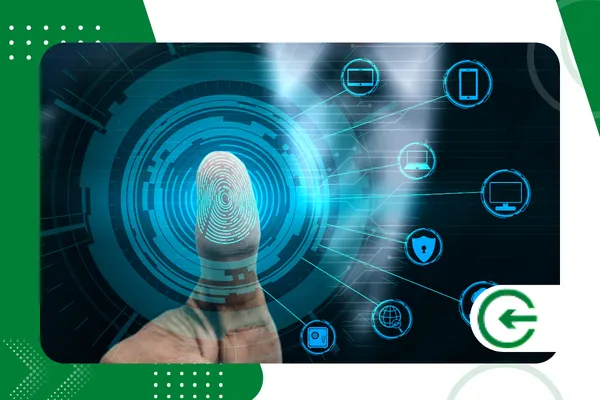
THE FHE privacy technology It represents the pinnacle of modern digital security, allowing sensitive data to be processed by third parties without the original information ever being revealed.
Adverts
Unlike traditional methods, where the file needs to be decrypted for analysis, this innovation maintains absolute protection throughout the entire computational lifecycle, ensuring complete compliance and confidentiality.
In this comprehensive guide, we'll explore how this cutting-edge encryption will transform sectors like healthcare and finance by 2026, offering a robust layer of security against leaks and unauthorized access.
Summary
- What is fully homomorphic cryptography and how does it work?
- What are the real benefits for the average user?
- Where is FHE already being successfully applied?
- What is the impact of this technology on artificial intelligence?
- How will the market adapt to the new safety standards?
- Conclusion and future perspectives.
What is fully homomorphic cryptography and how does it work?
The essence of FHE privacy technology Fully Homomorphic Encryption (FRE) resides in the mathematical ability to perform complex calculations on encrypted texts, generating results that, once decoded, perfectly match reality.
Previously, if a cloud company needed to analyze its financial expenses, it would have to "open" the file. With FHE, the server operates in the dark, processing code without knowing the values.
advertising
This technique resolves the historical dilemma between data utility and privacy. Now, it's possible to extract valuable insights from large databases without exposing the identity or trade secrets of those involved.
Mathematically, the structure allows addition and multiplication operations to be performed directly in the cryptographic domain. This eliminates the most vulnerable attack surface: the moment of decryption in RAM.
+ Innovations in e-learning and digital education in Brazil
What are the real benefits for the average user?
For the average citizen, the FHE privacy technology This means that your medical exams can be analyzed by AI without the software company knowing your medical condition or history.
Your financial privacy also reaches a new level of security. Management apps will be able to categorize expenses without ever accessing your actual account balance or specific details of your personal transactions.
Data breach protection becomes structural, not just a matter of protocol. Even if a hacker breaks into the processing server, they will only find useless mathematical noise, preserving its digital integrity.
Furthermore, control over data sovereignty returns to the owner. You share the "computing power" over your information, but you never relinquish ownership of the raw data.
Where is FHE already being successfully applied?
Currently, the banking sector leads in the adoption of FHE privacy technology For fraud detection in interconnected networks. Banks collaborate to identify criminal patterns without exposing their clients' confidential data.
In the field of genomics, researchers use this encryption to compare DNA sequences in search of cures for rare diseases. The genetic confidentiality of patients remains inviolable throughout the scientific research.
Governments around the world are beginning to test electronic voting systems based on FHE (Free Elective Held). This allows for auditable vote counting while maintaining absolute voter anonymity, combating manipulation and ensuring transparency.
To learn more about global cybersecurity standards, you can consult the... NIST (National Institute of Standards and Technology), which defines fundamental guidelines for advanced cryptography.
Comparison: Traditional Cryptography vs. FHE
| Feature | Conventional Cryptography (AES/RSA) | FHE Privacy Technology |
| Protection at Rest | Yes | Yes |
| Road Safety | Yes | Yes |
| Protection in Use | No (Requires Decryption) | Yes (Encrypted Processing) |
| Access to Raw Data | Required for analysis | Never revealed to the processor |
| Latency | Low | Moderate (under optimization) |
What is the impact of this technology on artificial intelligence?
Artificial intelligence requires massive volumes of data, which often raises ethical concerns. FHE privacy technology It allows for the training of machine learning models in fully protected environments.
Companies can now use sensitive user data to personalize services without violating laws like the LGPD or GDPR. AI learns from patterns, but doesn't "see" the individual behind them.
This enables the creation of much smarter and more intimate virtual assistants, which process your routines locally or in the cloud with a mathematical guarantee that no human or algorithm will read your conversations.
The future of federated learning will be driven by this encryption. Multiple devices contribute to the improvement of a global model without ever sharing the raw data generated by end users.
+ Firmware as an attack vector: the new weak point in security.
How will the market adapt to the new safety standards?

The technology market is in a phase of accelerated transition. Specialized hardware, such as cryptographic accelerators, is being developed to reduce the computational load required by... FHE privacy technology on a large scale.
Tech giants are already integrating open-source libraries to facilitate the development of "privacy-first" applications. This democratizes access to tools that were previously restricted to military research labs.
Cybersecurity professionals need to stay up-to-date to understand the nuances of lattice-based cryptography. This is the foundation of post-quantum security, where FHE (Flat Heat Energy) stands out significantly.
Regulatory compliance will cease to be a bureaucratic burden and become a competitive differentiator. Companies that guarantee privacy by design will attract consumers who are more aware and demanding of their digital rights.
+ Voice assistants for children: precautions and benefits
Conclusion
The implementation of FHE privacy technology It eliminates the old "trade-off" between technological convenience and personal security. We are entering an era where data processing no longer requires sacrificing privacy.
Technical speed barriers are rapidly falling with the advancement of processors in 2026. What was theoretically possible decades ago is now becoming commercially viable to secure every click and transaction.
Digital trust is the most valuable currency today. By adopting these protocols, society builds a resilient infrastructure capable of withstanding the most sophisticated cyber threats of the current decade.
To keep up with trends in data governance and protection, the portal of IAPP (International Association of Privacy Professionals) It offers valuable resources on emerging laws and technologies.
Frequently Asked Questions (FAQ)
1. Does FHE privacy technology slow down the computer?
Yes, processing encrypted data requires more computing power than usual. However, new dedicated chips and software optimizations are significantly reducing this impact by 2026.
2. Is this encryption secure against quantum computers?
Yes, most FHE schemes are based on mathematical network problems, which are considered resistant to quantum computer attacks, unlike traditional RSA methods.
3. Can any company use FHE today?
Yes, libraries like OpenFHE and Microsoft SEAL allow developers to integrate these functions into their systems. The infrastructure cost is the main factor to be evaluated by each organization.
4. What is the difference between FHE and end-to-end encryption?
End-to-end encryption protects the message only along its path. FHE protects the information even when it is being "processed" or analyzed by a server.
