
Extended reality (XR) trends that will transform everyday life.
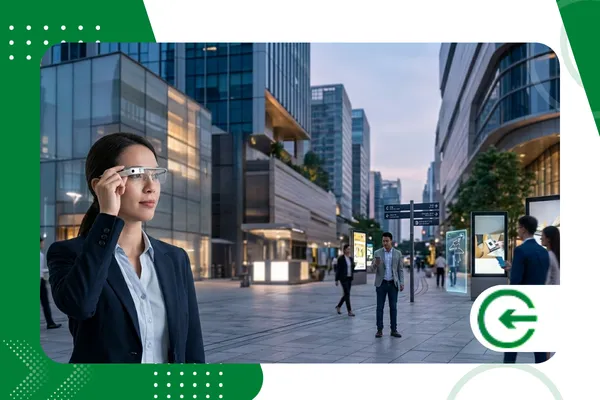
To the extended reality trends By 2026, the definitive fusion between the physical and digital worlds will be consolidated, profoundly altering how we interact with the environment and with other people.
ADVERTISING
The maturation of 6G networks and advanced spatial processing have enabled wearable devices to replace, in many contexts, the traditional screens of smartphones and computers.
In this article, we will explore how spatial computing, holographic telepresence, and integration with generative artificial intelligence are shaping a new era for work and leisure.
Summary
- What is Extended Reality (XR)?
- How is XR revolutionizing the modern workplace?
- What technologies are supporting the expansion of mixed reality?
- Where do education and technical training find new horizons?
- What is the impact of XR on health and precision medicine?
- How do retail and consumption adapt to spatial interfaces?
- Conclusion and Future Perspectives.
- FAQ – Frequently Asked Questions.
What is Extended Reality (XR) and why does it matter now?
Extended Reality is an umbrella term that encompasses Virtual Reality (VR), Augmented Reality (AR), and Mixed Reality (MR), creating a continuous spectrum of digital immersion.
Unlike previous years, 2026 marks the overcoming of critical technical barriers, such as headset weight, battery life, and near-zero network latency.
advertising
To the extended reality trends Current trends focus on "technological transparency," where the user doesn't feel like they're wearing a heavy accessory, but rather a natural extension of their senses.
Spatial computing now allows digital objects to have physical permanence in the environment, being recognized by different users simultaneously through shared cloud protocols and geolocation.
How is XR revolutionizing the modern workplace?
The physical office has become optional for millions of professionals who use infinite workstations, where multiple virtual screens are projected onto any surface or empty space.
Global companies are adopting holographic telepresence for meetings, allowing photorealistic avatars or volumetric projections to convey nuances of body language that traditional video could never capture.
Productivity has increased exponentially with the use of AI assistants integrated into the user's vision, providing contextual data and simultaneous translation during real-time conversations.
To the extended reality trends In the corporate sector, they prioritize cognitive ergonomics, reducing eye strain through adaptive lenses that simulate the natural depth of the human eye.
+ How will FHE privacy technology protect your personal data?
What technologies are supporting the expansion of mixed reality?
The central pillar of this evolution is the convergence between edge computing and the new high-resolution LiDAR sensors integrated into mobile devices.
These sensors allow for precise mapping of the environment, ensuring that digital elements interact with the laws of physics, such as shadows, occlusion, and real collisions with furniture.
Furthermore, the development of Micro-OLED microdisplays has brought such high pixel density that the "screen-door effect" has been completely eradicated from the industry.
Where do education and technical training find new horizons?
Immersive education has gone from being a luxury resource to becoming an essential pedagogical tool in universities and technical training centers around the world.
History students can "walk" through accurate archaeological reconstructions, while engineering students disassemble virtual airplane turbines without any physical risk or material cost.
To the extended reality trends In education, the focus is on knowledge retention, since learning based on practical experience generates much stronger neural connections.
Advanced medical simulators allow surgeons to practice complex procedures on digital twins of real patients, dramatically increasing the success rate in highly complex operations.
+ Firmware as an attack vector: the new weak point in security.
Comparison of XR Technologies in 2026
| Technology | Main Use | Common Device | Immersion Level |
| Virtual Reality (VR) | Training and Games | Closed Headsets | Total (100% Digital) |
| Augmented Reality (AR) | Navigation and Logistics | Lightweight / Smart Glasses | Data Overlay |
| Mixed Reality (MR) | Design and Medicine | Headsets Pass-through | Physical-Digital Interaction |
| Volumetric Holography | Events and Meetings | Field Projectors | No need for glasses |
What is the impact of XR on health and precision medicine?
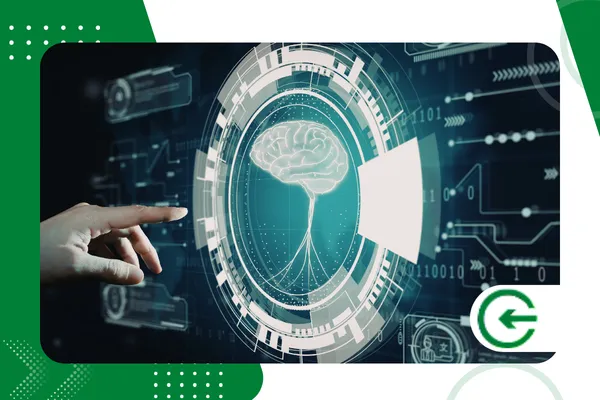
In medicine, volumetric data visualization allows doctors to analyze MRI scans in 3D, floating above the patient's body even before the first cut.
Therapists are using virtual reality to treat phobias and post-traumatic stress disorder, creating controlled environments where patients can safely confront their fears.
To the extended reality trends They also aid in motor rehabilitation, transforming repetitive and painful exercises into interactive games that motivate the patient to continue physiotherapy treatment.
Surgical precision has reached new heights with navigation systems that project the exact location of blood vessels and tumors directly into the surgeon's view during the operating procedure.
How do retail and consumption adapt to spatial interfaces?
The retail industry has undergone a radical transformation with the "try-before-you-buy" concept elevated to the highest level of visual and physical fidelity.
Consumers are now using AR mirrors at home to try on clothes that have a simulated fit using fabric physics algorithms, taking into account exact body measurements.
To the extended reality trends E-commerce eliminates the uncertainty of purchasing, allowing furniture and decorations to be visualized with realistic lighting within the room itself.
Luxury brands are creating "virtual ephemeral store" experiences in public locations, where only users with compatible devices can access and interact with exclusive digital collections.
The future of social interaction and the end of digital isolation.
Many critics feared that XR would isolate people, but what we see in 2026 is a digital layer that encourages exploration of the physical world.
Augmented reality games on an urban scale transform cities into living game boards, promoting face-to-face encounters between players at properly mapped points of historical and cultural interest.
To the extended reality trends Social media allows distant friends to share the same virtual couch to watch a movie, feeling each other's spatial presence.
This connection is enhanced by dynamic spatial audio, which adjusts the volume and direction of the sound according to the avatars' position in the shared living environment.
Security and privacy in the age of space computing.
With the rise in biometric data collection, such as eye tracking and movement patterns, cybersecurity has become a top priority for developers and regulators.
New legislation requires that the processing of sensitive data occur locally on the device, preventing information about the user's subconscious behavior from being sold without consent.
To the extended reality trends Responsibilities include "privacy zones" where tracking devices are automatically disabled to protect privacy in homes or restricted areas.
Iris and gait pattern authentication has replaced traditional passwords, offering a robust biometric security layer against unauthorized access attempts to digital profiles.
+ Game Streaming: How It Works and Why It's Growing
Conclusion
To the extended reality trends Projections for 2026 show that technology has ceased to be a futuristic curiosity and has become the basic infrastructure of modern society.
The ability to seamlessly and intelligently blend digital information with physical context redefines what we understand by human presence, learning, and productivity in the 21st century.
As devices become more discreet and powerful, the barrier between "online" and "offline" disappears, giving way to an enriched and functional reality.
To keep up with the technical standards and development of these ecosystems, visit the official website of... Khronos Group, responsible for the OpenXR standard that unifies the industry.
FAQ – Frequently Asked Questions
What is the difference between Virtual Reality and Mixed Reality?
Virtual Reality completely replaces the real environment with a digital one, while Mixed Reality combines virtual elements that interact directly with the physical objects around you.
Do I need fast internet to use extended reality trends?
Yes, a low-latency connection, such as advanced 5G or 6G, is essential to ensure that digital elements do not experience delays or annoying visual disconnections.
Can extended reality cause dizziness?
With refresh rates exceeding 120Hz and latency below 10ms in modern devices by 2026, motion sickness has been virtually eliminated.
Are these devices safe for children?
Most manufacturers recommend moderate use under supervision, focusing on educational content that encourages physical activity and interaction with the real environment.
How does XR help with remote work?
It allows the creation of collaborative virtual offices where colleagues from different countries interact as if they were in the same room, using whiteboards and 3D models.
