
Who invented the computer mouse and what did the first model look like?
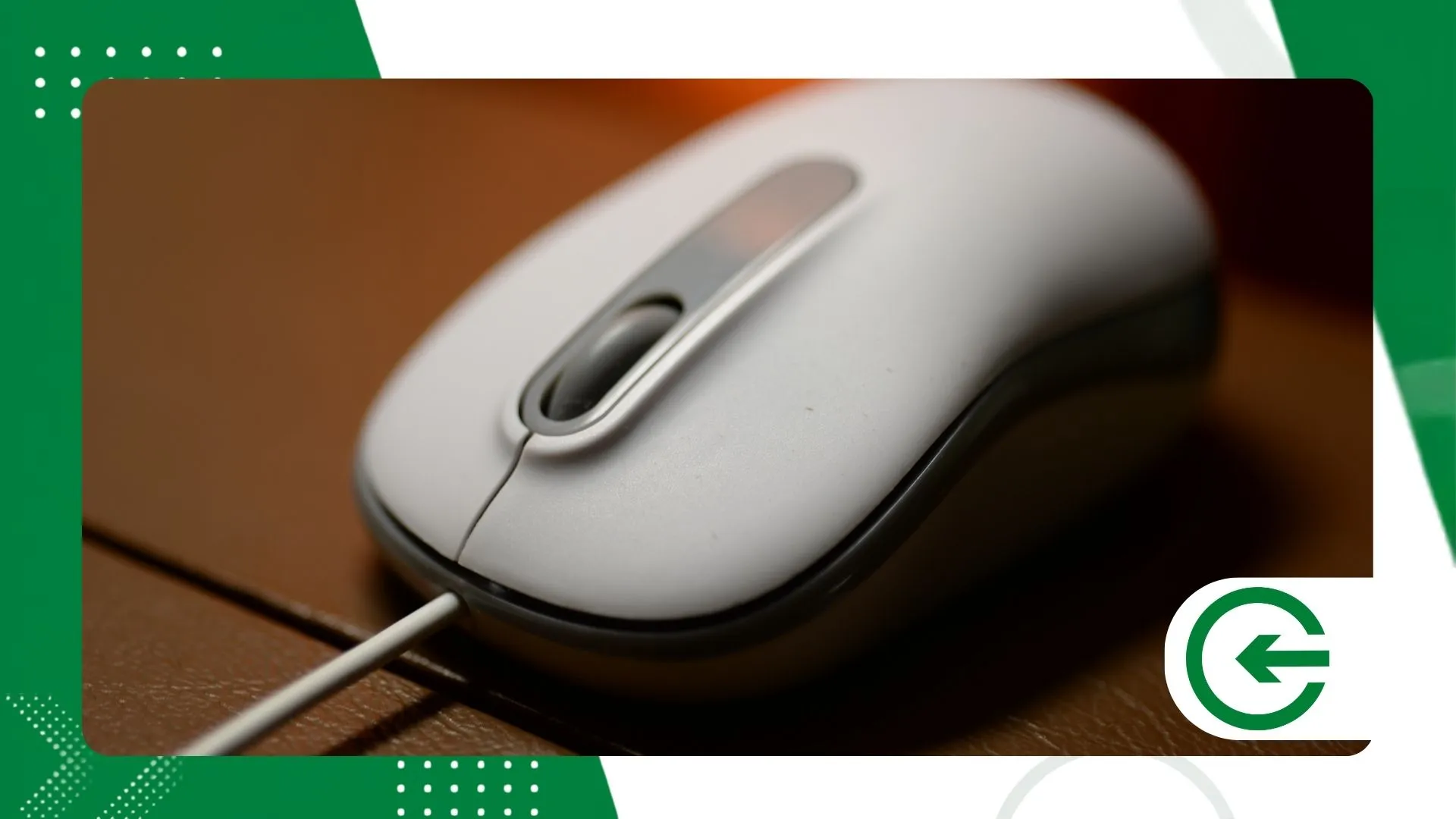
To know Who invented the computer mouse? It's about immersing yourself in a story about how human engineering transformed cold codes into a vivid and intuitive visual experience.
ADVERTISING
The current market demands that we understand these origins in order to map the real trends in physical computing, applied artificial intelligence, and new neural interfaces.
In this article, you will discover little-explored details about the creation of this iconic device, reviewing historical patents and analyzing the practical impacts of its evolution.
Article Summary
- Who invented the computer mouse?
- What did the first mouse model look like?
- Where and when was the mouse invented?
- Why was the name Mouse chosen?
- What was the journey of commercialization like?
- Comparative Table of Evolution
- The Historic Verdict
- Frequently Asked Questions (FAQ)
Who invented the computer mouse?
The scientist Douglas Engelbart was Who invented the computer mouse?, conceiving the idea in the 1960s at the Stanford Research Institute.
His plan was audacious: to augment human intellect through tools that would facilitate the direct manipulation of textual and graphical data on interactive screens.
advertising
Working side-by-side with engineer Bill English, the inventor transformed theoretical sketches into functional hardware that would change our relationship with machines.
The official patent for this mechanism ended up being registered under the technical and almost incomprehensible title of "XY Position Indicator for a Display System".
There is a historical injustice here: the research institution held the commercial rights, preventing Engelbart from receiving direct royalties for his magnificent technical invention.
The scientist's legacy is celebrated worldwide, as he laid the fundamental groundwork for the modern graphical interfaces that we operate with such ease today.
What did the first mouse model look like?
The initial prototype featured a rustic outer structure made of hand-cut wood, housing two large metal wheels arranged perpendicularly.
These internal wheels tracked the user's horizontal and vertical movements on the table, transmitting position data directly to the system monitor.
Unlike current ergonomic models that mold to the hand, the original device had a rectangular, brick-like shape that was rigid and visually uncomfortable.
The device had only one small red button located in the upper right corner, used to trigger commands and select elements on the screen.
The communication cable was located at the back of the object, resembling a rodent's tail, which led to some funny nicknames among the team.
Years later, Bill English replaced the wheels with a free-rolling ball, increasing the precision of two-dimensional movements on flat surfaces.
Where and when was the mouse invented?
The entire development phase took place at SRI's Information Processing Laboratory in California, a region that would later become Silicon Valley.
The first physical prototype was ready in 1964, but the world only became acquainted with the technology in 1968, at an exhibition that shocked the computer world.
This memorable event became known as "The Mother of All Demonstrations," where Engelbart presented live interactive text, video conferencing, and the first hyperlinks.
At that time, computers were gigantic boxes operated by punch cards, which made the demonstration seem like something straight out of science fiction.
The presentation proved that machines could serve as interactive personal assistants, truly expanding the cognitive capabilities of professionals in any field.
Why was the name Mouse chosen?
The choice of the term occurred spontaneously within the laboratory, driven by the obvious physical resemblance between the block of wood and the rodent.
The flexible wire that connected the device to the computer came out the back, literally mimicking a mouse's tail.
No one on the team could remember who used the word first, but the nickname stuck permanently in the internal memos.
Even when large corporations tried to register pompous brand names for the product, popular preference for the simple and descriptive term won out in the market.
In interviews, Engelbart found it ironic that such an informal expression had become the global standard for designating cutting-edge technology.
The simplicity of the name helped to demystify computing, making the accessory user-friendly for the general public who were beginning to interact with digital screens.
++ Fiber optic internet for homes: advantages and precautions
What was the journey of commercialization like?
The commercial journey began when Xerox realized the potential of the accessory and integrated it into the innovative operating system of the Xerox Alto computer.
But the prohibitive cost of manufacturing that spherical mechanism prevented the product from reaching the masses, restricting its use to wealthy laboratories.
The big turning point came when Steve Jobs visited Xerox and realized that this interface based on pointers and windows would shape the future.
Jobs hired a design firm to simplify the mechanism, drastically reducing costs to make the launch of the Macintosh viable in 1984.
The Macintosh popularized the peripheral, transforming the act of clicking and dragging into a natural behavioral reflex for billions of users worldwide.
Soon after, Microsoft adopted the technology in Windows, establishing the device as a mandatory component for browsing on personal computers.
++ How to choose the ideal router for a large house.
Comparative Table of Evolution
The evolution of digital pointers shows an impressive leap in precision and connectivity over the last few decades. See the main milestones below:
| Attribute | First Model (1964) | Sphere Model (1980s) | Optical/Laser Model (2026) |
| External Material | Hand-carved wood | Rigid molded plastic | Ergonomic and lightweight polymers |
| Search Engine | Vertical metal wheels | Inner rubber ball | High-precision LED and laser sensors |
| Connectivity | Thick copper cable | Serial cables or PS/2 ports | Bluetooth and Wireless connection |
| Number of Buttons | Just one red button | Two or three mechanical buttons | Multiple programmable buttons and scroll wheels |
| Sensitivity (DPI) | Extremely low | Low and constantly dirty | Superior adjustable DPI over 25,000 |
The Mouse in the Age of Genetic Artificial Intelligence

Current high-performance models are beginning to incorporate local data processing to predict cursor trajectory based on operator usage habits.
This algorithmic symbiosis reduces residual latency to zero, allowing design and engineering professionals to manipulate three-dimensional virtual environments with unprecedented fluidity and naturalness.
The peripheral ceases to be a mere static pointer and transforms into an active tool for mutual productivity between humans and software.
Neural Interfaces and the End of the Click Era?
The advancement of accessibility technologies and artificial intelligence raises debates about the long-term survival of the device that Douglas Engelbart designed.
Bioengineering companies are already testing sensors that translate brain impulses into digital commands, eliminating the need for any physical movement or mechanical touch on the table.
This paradigm shift could transform the act of clicking into a nostalgic memory, converting the cursor into a direct extension of our thoughts.
Even in this futuristic scenario, the traditional peripheral should endure for decades due to its unbeatable surgical precision in complex professional tasks.
++ What are continuous learning algorithms and how do they impact apps?
The Historic Verdict
Looking back and understanding Who invented the computer mouse? This shows us that revolutions are born from the desire to simplify chaos.
The wooden block designed by Douglas Engelbart broke down profound conceptual barriers, paving the way for the digital inclusion that shapes our daily lives.
Today, even with the rapid advancement of touchscreens, the accessory remains an irreplaceable extension for productivity and high performance.
Investigating the past prepares us for the new interfaces that emerge every day, ensuring a critical perspective on the hardware of tomorrow.
To keep up with upcoming discussions on user interfaces and advanced engineering, it's worth monitoring in-depth analyses of... MIT Technology Review.
Frequently Asked Questions (FAQ)
Who invented the computer mouse and in what year?
American scientist Douglas Engelbart invented the device in 1964, working within the development laboratories of the Stanford Research Institute.
How did the world's first mouse work?
The device used two metal wheels arranged perpendicularly to record movements, sending the position data directly to the screen.
What was the first computer to use a mouse?
The Xerox Alto, developed in 1973, was a pioneer in the practical use of a peripheral integrated with a graphical test interface.
Why did the ball mouse stop being used?
The mechanical system accumulated a lot of surface dust, requiring constant maintenance and offering much lower precision than current optical sensors.
What are the future trends for this peripheral?
The market focuses on ultra-lightweight ergonomic models, silent clicks, and high-fidelity sensors integrated with artificial intelligence workflows.
