
Apps that turn photos into drawings and illustrations
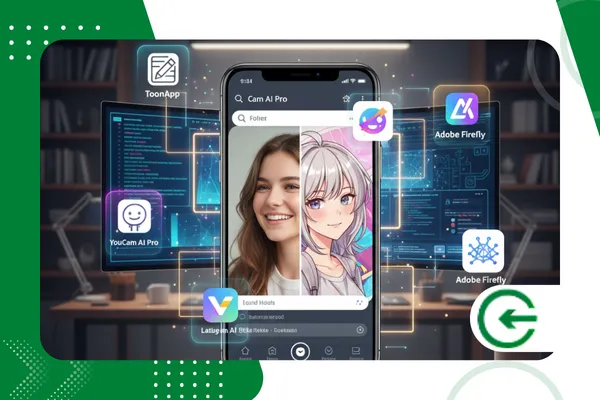
The fever of apps that transform photos into drawings and illustrations It took over the internet, offering a portal to unlimited creativity.
ADVERTISING
These tools, powered by Artificial Intelligence (AI), have democratized digital art for millions of users.
Now, anyone can transform themselves into an anime character, an oil painting, or a funny caricature with just a few taps on the screen.
The growth of the AI-powered image editing market is a direct reflection of this demand for visual personalization.
However, the ease of use masks the technological complexity and raises essential questions about privacy and authorship.
advertising
This article explores the best tools available, revealing how AI is reshaping artistic expression in the year 2025, in a responsible and intelligent way.
Summary:
- Why has AI become the key tool for transforming photos into art?
- How do algorithms work? deep learning in these editing applications?
- What are the main ones? apps that transform photos into drawings and illustrations Trending?
- What are the ethical and privacy considerations when using these apps?
- What does Brazilian law say about the copyright of AI-generated art?
- How to choose the ideal app for your personal style or campaign. marketing?
- How does this technology impact the market for traditional illustrators and artists?
- Frequently Asked Questions (FAQ).
Why has AI become the key tool for transforming photos into art?
Artificial intelligence has revolutionized the editing process, making artistic creation accessible to everyone.
AI eliminates the need for softwares Complex and time-consuming manual work. The user focuses only on the idea.
Advanced tools, such as Nano Banana (Gemini 2.5) or Midjourney, use sophisticated learning models.
They are able to recreate complex visual styles, from Van Gogh to cartoons Japanese, in seconds. Speed is a key differentiator.
AI technology not only applies filters, but interprets the image, reconstructing it into a new artistic format.
She understands the depth, lighting, and features of the human face. This ensures a convincing and high-quality result.
The desire to have unique avatars and personalized visual content fuels the exponential growth of the sector.
These apps directly address the human need for creative self-expression in the digital age.
How to use natural filters without overdoing the editing.
How do algorithms work? deep learning in these editing applications?
Those apps that transform photos into drawings and illustrations They depend on algorithms of deep learning, such as Generative Adversarial Networks (GANs).
GANs are trained on millions of image pairs, learning the aesthetics of different art styles.
One part of the algorithm generates the image in the new style (the generator), and the other part evaluates the quality of the result (the discriminator).
This process of internal "competition" refines the output until it appears authentic. The result is perfect art.
The user only sends a photo (input), and AI applies a complex “style transfer”.
The original photo is preserved, but the texture, lines, and colors are mapped to the chosen style. The photo is magically transformed.
This technology allows an app like YouCam AI Pro to deliver ultra-fast transformations on your mobile phone.
Processing takes place in the cloud, leveraging the power of next-generation servers. Performance is instantaneous.
What are the main apps that transform photos into high-resolution drawings and illustrations?
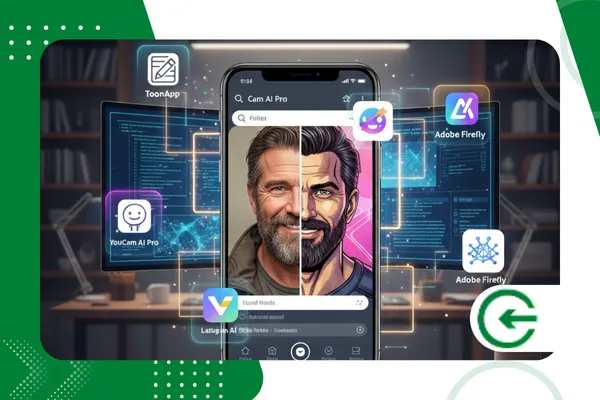
The market is saturated with options, but some apps that transform photos into drawings and illustrations They stand out for their quality.
ToonApp and ToonArt are extremely popular for the style. cartoon and caricature. They offer funny results.
The YouCam AI Pro is a strong competitor, known for its versatility across multiple artistic styles, from anime to pencil sketches.
Its intuitive interface makes it accessible to both beginners and professionals. Many consider it the leader in... mobile.
In the professional segment, integrated tools such as Canva IA (Canvasify) or Adobe Firefly allow for the transformation of photos within a digital environment. design More comprehensive. They offer total control over the final result.
The ideal choice depends on your goal: if you're looking for quick entertainment, use an app. mobileIf the focus is on producing content for a campaign, use the integrated tools in softwares in design.
+ Film Grain Effect: Retro Filters for Photo Editing
What are the ethical and privacy considerations when using these apps?
Privacy is the Achilles' heel for many. apps that transform photos into drawings and illustrations free or freemium.
By submitting a photo, you are providing biometric data from your image to third parties. Read the usage policy.
It's crucial to understand how the app stores, uses, and monetizes the photos you submit for processing.
Many companies use these images to refine their own AI models. Your face could become data.
Another ethical issue involves the use of photos of third parties without their consent.
Turning someone's photo into a drawing without their explicit permission may violate their image rights. The responsibility lies with you.
A selfie Image transformed into art must have the full consent of the person portrayed, especially if it is for commercial use. Digital ethics demand transparency and respect for the image of others.
What does Brazilian law say about the copyright of AI-generated art?
The issue of copyright in works created by AI is still an evolving legal debate in Brazil and around the world.
Law No. 9.610/98 (Copyright Law) grants authorship only to a natural person, that is, to a human being.
This implies that, currently, art generated autonomously by AI is not eligible for copyright registration.
In theory, it falls into the public domain or follows the rules of the generating platform. There is no automatic legal protection.
However, if you make creative and substantial modifications to the AI-generated image, your contribution may be protected.
Human-made editions need to be original and have artistic value. Human intervention is valued.
A user generates a style photo cartoon He created it using ToonApp, but then improved it in Photoshop, adding his own backgrounds and visual elements.
The part he edited can be protected. It's the human element that counts.
How to choose the ideal app for your personal style or campaign. marketing?
The choice of application should be guided by the purpose of the image and the visual style you wish to achieve.
There is no single "best" option; there is only the one that is most suitable for your project. Define your objective first.
For campaigns of marketing that require high resolution and integration with other elements of designChoose professional tools.
Adobe Firefly and Midjourney offer more control over the final output. They guarantee professionalism.
If you're just looking for entertainment or a new anime-style profile picture, use apps that transform photos into drawings and illustrations like ToonApp or YouCam AI Pro.
Ease of use is a priority.
Consider the pricing model: many free apps impose watermarks or limit the resolution of the final image.
Choose the paid version if the image is for serious, professional commercial use.
+ CapCut vs. Lightroom Mobile: Which Edits Photos Better for Social Media?
How does this technology impact the market for traditional illustrators and artists?
The rise of AI generators represents both a challenge and an opportunity for traditional artists.
The fear is that the ease of AI will devalue manual and creative human labor. The impact on the market is undeniable.
Many artists are integrating AI into their workflows, using it for quick sketches or for inspiration.
AI becomes a powerful assistant, speeding up repetitive processes and freeing the artist for creative refinement.
A analogy The explanation for this change is as follows: AI is like the invention of the photographic camera for portrait painters.
It didn't replace art, but it forced it to evolve and to value the unique expression of humankind. Art reinvents itself.
The market for on-demand and custom illustration still holds high value, focusing on originality and unique style.
AI creates the generic, the artist, the memorable. Human skill will never be fully replaced.
A study conducted by Future Market Insights in 2024 estimated the global AI image editing market at US$$ 80.3 million.
The projection is that it will reach US$219.9 million by 2034, with an annual growth of 10.50%. This demonstrates the consolidation of AI in the sector.
| Application | Style Focus | Recommended for Commercial Use | Resolution Requirement |
| Midjourney | Stylized and High-Fidelity Art | Yes (Paid License Terms) | High |
| YouCam AI Pro | Various Styles (Anime, Drawing, Painting) | Yes (Premium Version) | Medium to High |
| ToonApp / ToonArt | Caricature and Cartoon Simple | No (Generally for Personal Use) | Average |
| Adobe Firefly | Integration with the Adobe Ecosystem | Yes (Adobe Terms) | High |
A young influencer uses a free app to transform photos into anime avatars for Instagram.
She understands that the low resolution and watermark are the price for being free. Her followers love the new feature.
The ethical and informed use of these apps that transform photos into drawings and illustrations It's the safest way.
AI is a powerful tool, but human control and responsibility are indispensable. Why not embrace AI with intelligence and ethics?
Access the portal of Brazilian Association of Intellectual Property (ABPI) For up-to-date information on AI legislation in the context of copyright.
Visual creation is constantly changing. Stay updated to ensure your art and your... marketing remain relevant and, above all, legal.
Frequently Asked Questions about Photo and Drawing Apps
What is the prompt And what is its importance in the art of AI?
O prompt It's the text command you provide to Artificial Intelligence, describing what you want to create or the style to be applied. apps that transform photos into drawings and illustrations, O prompt Refines the style of the generated drawing. A good prompt It is the key to perfect art.
If the app is free, can I use the generated artwork commercially?
Generally, no. Most free apps restrict commercial use of the generated images. Always check the "Terms of Use" or the platform's license policy. Commercial use usually requires a premium subscription.
Does removing a watermark guarantee the commercial use of the image?
Absolutely not. The watermark is simply a security measure the company takes to protect its intellectual property and promote the app.
Illegally removing it does not grant you the right to commercial use of the image. The risk of legal action remains.
How can I ensure that the AI-generated image does not infringe on the style of a real artist?
It's a risk. Avoid it. prompts that explicitly mention the names of living artists (Ex: “in the style of Van Gogh”Prefer to describe the style in generic terms (Example: "Impressionist oil painting"The debate about stylistic plagiarism continues to rage.
For more information on software development and AI ethics, please visit the website of Brazilian Computer Society (SBC).
