
Google Drive in ChatGPT: what changes with the unified integration in 2026
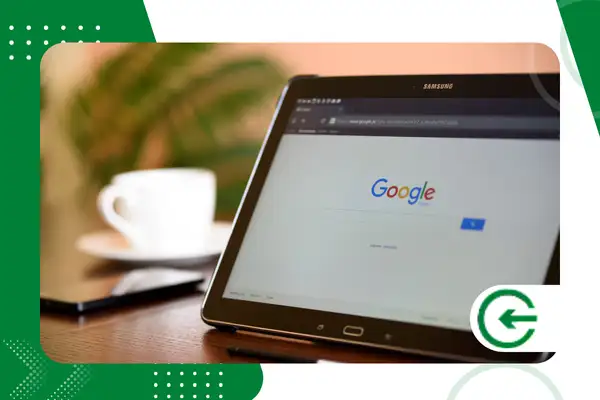
The integration of Google Drive on ChatGPT It became a technological milestone in 2026, transforming the way we interact with documents, spreadsheets, and presentations directly within the OpenAI interface.
ADVERTISING
This evolution is not merely a functional cosmetic change; it is a structural convergence that finally retires the repetitive cycle of manual downloads and uploads, allowing artificial intelligence to seamlessly inhabit our private databases.
In the following lines, we explore how this connection redesigns workflows, analyze the weight of real-time synchronization, and investigate the real impact for those who use the technology to make decisions, and not just to fill space.
Table of Contents
- The new architecture of integration in 2026
- Strategic configuration and activation
- The gray area of privacy and security.
- Table: What's been left behind and what's arrived now
- The end of context friction in productivity.
- Frequently Asked Questions (FAQ)
The new architecture for integrating Google Drive into ChatGPT in 2026
The big change here is the end of isolation. Before 2026, using Drive within chat felt like a patch; you had to switch between unstable plugins or deal with partial file reads that rarely understood the whole thing.
Currently, the Google Drive on ChatGPT It operates symbiotically. AI doesn't just "read" a static document; it understands the hierarchy of folders and the relationship between different files.
advertising
It's the difference between asking someone to read a book and hiring an assistant who already knows your entire library.
With the maturation of long-context models, indexing has become deeper. If you have a cost spreadsheet and a brand guidelines PDF, the system cross-references this information without you needing to explain the obvious.
There's something liberating about not having to "teach" the machine the context every time a new conversation begins.
The "Projects" feature is perhaps the highlight of this update. It allows specific Drive folders to become the chatbot's temporary brain.
If a piece of data changes in the original spreadsheet, the AI's response changes in the subsequent chat. It's the end of outdated information.
Strategic setup and activation: How to take the first step
Enabling the feature is simple, but requires attention to permission details. In the applications menu, the new unified connector has replaced the old "Beta" versions, which were notorious for disconnecting in the middle of complex tasks.
The connection of Google Drive on ChatGPT It uses the OAuth 2.0 protocol. In practice, this means that you hold the key to the vault.
You don't open up your entire life to OpenAI; you choose which drawers it can open, whether it's a single file or a directory shared with your team.
Once the Drive icon appears in the attachment bar, the workflow ceases to be linear. You select the file directly from the cloud, saving disk space and, most importantly, ensuring that you are working on the final version of the document — that drama of “v3_final_adjusted.docx” finally begins to disappear.
For those who manage teams, the ChatGPT Business dashboard centralizes this control. It's possible to grant access to training manuals to HR, while the finance department keeps its cash flow spreadsheets in a restricted area, all under the same infrastructure.
+ Sustainable transportation apps: bicycles and electric scooters
Data analysis: Where intelligence meets the repository.
From a technical standpoint, the reduction in latency by 2026 is remarkable. The response time for processing massive volumes of data has dropped dramatically, thanks to a fiber optic infrastructure and edge servers that optimize traffic between Google and OpenAI.
Use the Google Drive on ChatGPT It allows you to ask questions that previously would have required hours of manually cross-referencing data.
"Which supplier has increased its price the most in the last three quarters?" is no longer a filtering challenge in Excel, but a question in natural language.
The reasoning engine now interprets visual nuances. It understands the positioning of one cell relative to another and can generate data visualizations that can be saved directly back to your Drive.
“The deep integration between language models and the cloud brings an end to the era of inert data. Now, information is conversational and, above all, actionable.”
According to recent OpenAI Release NotesThe processing capacity has been refined so that the system ignores noise and focuses on what really matters within extensive corporate documents.
Resource Comparison: The Technological Leap of 2026
Not all that glitters is gold, but the table below shows that progress here has been solid, moving away from the vague promises of previous years to deliver tools that can truly withstand the rigors of daily use.
| Functionality | Old Model (Until 2025) | Single Integration (2026) |
| Synchronization | Asynchronous and unstable | Instantaneous and bidirectional |
| Volume Limitation | Individual and limited files | Indexing folders and repositories |
| Interaction | Read-only content | Editing and creating new files |
| Context | I would lose the thread in long texts. | Persistent memory via Projects |
| Security | Generic authorization | Audit logs and granular access |
The end of contextual friction in modern productivity.
In the professional world, time is the most valuable commodity. Professionals who have already mastered the... Google Drive on ChatGPT They report time savings that are almost unbelievable.
It's not just about typing faster, but about thinking more strategically.
"Contextual friction" is the biggest enemy of productivity: the time you waste explaining to a colleague (or to AI) what's already written elsewhere. With integration, this obstacle is removed. The AI already "knows".
Imagine asking: “Based on the notes from yesterday’s meeting in Google Drive, update the sales presentation and change the profit projection.”
The task that used to take an entire afternoon is now solved in seconds, with a minimal margin of error.
This monitored autonomy transforms the chatbot into something far beyond a simple text generator.
He becomes an information curator who uses his proprietary data as a compass, which drastically reduces the risk of hallucinations—those creative but completely false answers that haunted previous versions.
+ Fitness apps for beginners who don't need a gym.
Privacy: The elephant in the room
It's inevitable to talk about security when we hand over the keys to our files to an AI. In 2026, OpenAI adopted a more transparent stance, implementing layers of encryption that completely isolate the processing environment from the user.
When using the Google Drive on ChatGPTYou operate in a silo. Your data is not used to train the global model that the rest of the world uses.
What's yours, stays yours. This distinction is vital for any company that values intellectual property.
There are automatic compliance checks. The system identifies if you are trying to process sensitive data, such as CPF numbers (Brazilian taxpayer ID) or health information, and applies extra security protocols as required by the LGPD (Brazilian General Data Protection Law) and other international regulations.
This sovereignty over information ensures that technology serves the user, and not the other way around. Having control over where the data resides and who can access it is what separates a technological toy from a serious work tool.
As the portal points out Exam on AI at WorkMastering these integrations is the dividing line between those who merely use the technology and those who lead it.
+ Personalized news reading apps
Final Reflection
The unification of Google Drive on ChatGPT 2026 is not the end of the journey, but the beginning of a new form of document intelligence. We are leaving the era of "attaching files" to enter the era of "conversing with knowledge".
The result is cleaner productivity, less mechanical and much more focused on what humans do best: critical interpretation and fact-based decision-making.
Frequently Asked Questions (FAQ) {#faq}
How do I revoke access to my Drive account?
The process is instant. Go to “Settings”, access the “Personalization and Apps” tab and disconnect Google Drive. All access tokens are invalidated immediately.
Can AI alter complex formulas in my Google Sheets?
She can suggest and apply changes, but you can set access to "Read Only" if you prefer that she only analyze the data without altering the structure of your spreadsheet.
Is this integration available for all languages?
Yes, support is global. The interface and file understanding work perfectly in Portuguese, English, Spanish, and several other languages, maintaining technical accuracy in all of them.
What happens if the original file is deleted from Drive?
ChatGPT will lose access immediately. If the file is in a "Project," the AI will inform you that the data source is no longer available, ensuring that you don't receive answers based on ghosts of old files.
