
Shared calendar apps for families
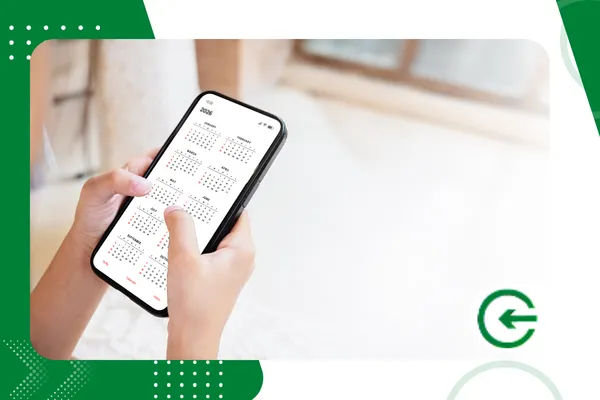
You shared calendar applications They became fundamental tools in 2026, as they allow family units to coordinate complex routines with surgical precision, eliminating scheduling conflicts and promoting harmony in daily life.
ADVERTISING
Abandoning physical calendars on the refrigerator promotes modern mobility, ensuring that parents and children can access urgent appointments in real time, drastically reducing the mental overload of those managing the household.
Exploring these smart technologies strengthens internal communication, ensuring that school events or professional meetings coexist without unnecessary stress, transforming domestic logistics into a fluid and collaborative experience.
Would you like me to now elaborate on the best app options for your blog?
Table of Contents
- The Digital Family Organization Revolution
- Which are the best? shared calendar applications In 2026?
- Essential criteria for choosing your management tool.
- How to set up an efficient and functional family calendar?
- What is the impact of technology on home harmony?
- Comparative table of the main platforms on the market.
- Frequently Asked Questions (FAQ) about digital calendars
The Digital Family Organization Revolution
Living in 2026 requires precise coordination between multiple calendars, especially when children's extracurricular activities and remote parent meetings frequently clash during business hours.
advertising
In the past, paper calendars on the refrigerator solved the problem, but urban mobility and remote work demand solutions that keep track of all family members in real time.
The implementation of shared calendar applications It allows everyone to see updates instantly, avoiding scheduling conflicts and ensuring that mutual support occurs naturally.
Using these intelligent systems significantly reduces communication stress, as it eliminates the need to repeatedly confirm the same information via text messages or quick phone calls.
Modern family time management prioritizes transparency and accessibility, transforming mobile devices into command centers that promote active collaboration between adults, teenagers, and children.
Which are the best? shared calendar applications In 2026?
Selecting the ideal platform depends on the specific needs of your core business, considering everything from ease of use to integration with virtual assistants and smart home devices.
Google Calendar remains the preferred choice due to its robustness and free availability, allowing the creation of specific calendars that can be edited by multiple users with Gmail accounts.
For those seeking a visually intuitive experience, TimeTree stands out for its interface focused on social communication, allowing comments and photos directly on each event scheduled in the timeline.
Cozi Family Organizer maintains its leading position in 2026 by offering a complete solution that includes shopping lists, meal planners, and shared diaries.
Another powerful option is FamilyWall, which functions as a private social network, offering real-time location, household chore management, and a digital vault for important documents.
Learn more about calendar integration in Google's official support section., where you can find detailed tutorials on how to securely manage sharing permissions.
How to set up an efficient and functional family calendar?
Establishing a system that everyone actually uses requires strategy and simplicity, starting with the clear definition of categories through distinct colors for each family member or activity.
Start the process by importing existing school and professional calendars to avoid the rework of manually entering events that already have digital records on other platforms or emails.
Set up custom notifications that alert those responsible with sufficient advance notice, ensuring enough time for travel or necessary preparations before the start of each scheduled appointment.
Encourage older children to take responsibility for their own schedules, teaching them how to incorporate workouts, schoolwork, and social events directly into their routines. shared calendar applications.
Conduct a brief weekly review, preferably on Sundays, to align everyone's expectations and address any potential conflicts that arose during the automated planning of the intelligence system.
+ Apps that continue collecting data even when not in use.
How important is privacy in digital calendars?
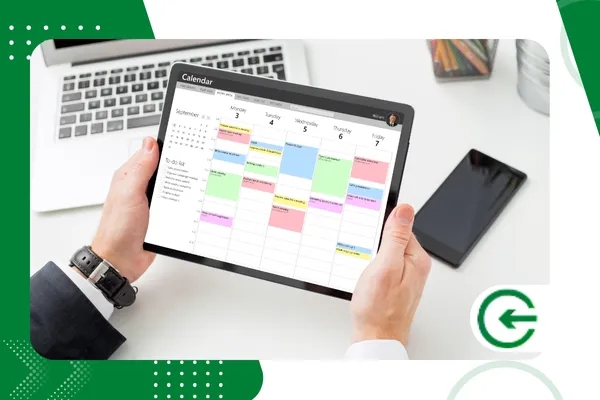
Protecting your family's sensitive data is a top priority when using any online tool that tracks the locations, daily routines, and personal information of children or vulnerable adults.
Always check your sharing settings to ensure that only authorized people have access to event details, avoiding the public exposure of home addresses or school schedules.
You shared calendar applications Modern systems use end-to-end encryption to protect information, but it is up to the user to manage strong passwords and enable two-factor authentication.
Teach family members not to include overly detailed information in description fields that could be seen by third parties if the device is lost or improperly accessed.
Regularly monitoring who has viewing permission helps maintain a secure digital environment, especially when close friends or service providers are temporarily added to specific events.
+ The best augmented reality apps to decorate your home for Christmas without spending a penny.
Comparative Analysis: Best Options for 2026
Below, we present a detailed table with the most relevant features of the market-leading platforms to facilitate your decision based on real functionalities and current subscription models.
| Application | Main Feature | Cost (Estimated) | Best For |
| Google Calendar | Universal Synchronization | Free | Email Integration |
| Cozi Family | Meal Planner | Free / Premium | Complete Household Management |
| TimeTree | Event Communication | Free / Ads | Young and Visually Impaired Families |
| FamilyWall | Location and Tasks | Freemium | Security and Logistics |
| Any.do | To-Do Lists | Annual Subscription | Families focused on Productivity |
Why has artificial intelligence changed family schedules?
The integration of AI in 2026 has transformed... shared calendar applications in proactive assistants who suggest ideal times for family dinners based on common schedules for everyone.
These systems can read invitations in PDF format or images of school circulars, automatically extracting dates and times to fill in the calendar without the need for parents to do exhaustive manual typing.
Furthermore, predictive analytics alerts users to potential traffic congestion before an appointment, suggesting they leave earlier to keep to their scheduled time.
Automation also extends to household supply management, where the calendar recognizes consumption patterns and suggests dates for grocery shopping integrated with the platform's shared lists.
In this way, technology ceases to be merely a repository of information and becomes a logistical consultant that optimizes every minute of the modern family's daily life.
+ New digital wellness apps that help reduce anxiety and stress.
What is the impact of technology on home harmony?
Reducing verbal conflict over "who should be where" is the most immediate benefit perceived by families who consistently adopt the use of digital organizational tools.
When everyone has full visibility of each other's responsibilities, greater empathy develops for others' time, promoting a fairer division of household chores and childcare.
You shared calendar applications They also free up mental space for more meaningful conversations, as dialogues cease to be purely logistical and begin to focus on feelings and lived experiences.
Children who grow up using these systems develop early time management and autonomy skills, understanding the importance of planning to achieve academic and personal goals in the future.
Therefore, investing time in setting up these tools directly reflects on the quality of life and reduces collective anxiety within the family environment over the years.
How can we encourage all family members to participate?
The success of any technological tool depends on the active participation of everyone, so it is essential to present the application as a facilitator of freedom, not as an excessive means of control.
Start by introducing fun events into the calendar, such as movie nights, trips, or visits to parks, so that children associate the schedule with positive moments and not just obligations.
Avoid criticizing someone if they forget to schedule an appointment at the beginning; instead, reinforce the benefits of having that information available to everyone when the system is working correctly.
Choose a platform that has a user-friendly interface for different ages, ensuring that grandparents and grandchildren can navigate the basic functions without constant or complex technological frustrations.
Consistent daily use by parents serves as the best example, transforming the act of consulting the shared calendar applications in a natural habit expected by everyone.
The future of family organizations: what to expect beyond 2026?
Trends point to even deeper integration with the Internet of Things (IoT), where the family calendar will automatically control the lighting and temperature of the house for specific events.
Imagine the system preparing the environment for the children's study time at the scheduled time or preheating the oven when the calendar indicates the start of preparing the planned group dinner.
Augmented reality could project the daily calendar onto kitchen surfaces, making viewing appointments an immersive and even more accessible experience for all residents of the home.
Advanced biometric security will ensure that health or financial information within family apps remains strictly private, accessible only through highly secure and reliable facial or fingerprint recognition.
We are moving towards a scenario where time management will be invisible and fully integrated into the flow of life, allowing families to focus on what really matters: human connection.
Conclusion
The adoption of shared calendar applications This represents a crucial step for any family wishing to navigate the complexities of the contemporary world with less stress and greater productive efficiency.
By centralizing information, promoting transparency, and using intelligent automation features, these tools give parents and children back their most valuable resource: quality time.
Choosing the right platform requires testing the features and verifying which interface best suits your household's lifestyle, ensuring that the technology serves the family, and not the other way around.
Start structuring your digital calendar today and see how internal communication becomes more fluid, allowing everyone to live with greater peace of mind and focus on their collective goals.
FAQ: Frequently Asked Questions
What is the best free calendar app for families?
Google Calendar is widely considered the best due to its versatility, cross-platform synchronization, and lack of cost for core features like sharing and smart notifications.
How can you convince teenagers to use the family calendar?
Give them the autonomy to manage their own schedules and show them how the planner avoids constant nagging from parents, since information about training and studies will be visible.
Is it safe to put your children's school address on the app?
As long as you use trusted platforms with two-factor authentication and restrict access to family members only, the risk is extremely low and controlled.
Do calendar apps work without an internet connection?
Most allow you to view appointments offline, but synchronization of new information entered by other members will only occur when the device is reconnected to an active network.
Can I integrate my work schedule with my family schedule?
Yes, most of them. shared calendar applications It allows you to overlay different calendars, enabling you to view your work and family schedules on a single, unified screen.
Can I use these apps to manage household chores?
Platforms like FamilyWall and Cozi have specific modules for to-do lists, allowing you to assign responsibilities and track the completion of cleaning, shopping, and other household activities.
Would you like me to review the security settings of any of these applications specifically for you?
