
How translation apps break down barriers to travel

You Translation apps break down barriers in travel. in a way that seemed like science fiction just a decade ago. The fear of not being understood paralyzed many travelers.
ADVERTISING
The feeling of landing in a country where you can't read the signs or order a coffee was a major obstacle. Many limited themselves to "easy" destinations.
Fortunately, technology has radically changed this scenario. The smartphone has become a universal pocket interpreter, available 24 hours a day.
Artificial intelligence (AI) and neural networks are the engines of this revolution. They not only exchange words, but attempt to understand the context of the sentence.
A recent report from Booking.com, published in October 2025, revealed a striking statistic: approximately 801,300 consumers have already used AI to plan their trips.
advertising
This shows that confidence in technology to mediate the travel experience is extremely high. Translation is undoubtedly at the forefront of this interaction.
This article explores how this technology works, its real-world impact on the traveler's daily life, and what it still cannot solve.
Table of Contents
- Why was the language barrier the traveler's biggest fear?
- How has translation technology evolved so rapidly?
- What are the roles that truly matter in 2025?
- How do translation apps break down barriers to travel in practice?
- What is the real impact of these apps on the tourism industry?
- What is it that AI still can't (and perhaps never will be able to) translate?
- Conclusion: The confidence to explore the unknown
- Frequently Asked Questions (FAQ)
Why was the language barrier the traveler's biggest fear?
Traveling abroad has always involved a level of language anxiety. Before mobile technology, the tools were limited and clunky.
Travelers relied on heavy physical dictionaries. Another option was small phrasebooks, which rarely covered a real emergency.
The direct consequence was friction. Simple tasks, such as buying a train ticket or explaining a food allergy, became sources of stress.
Many people, out of fear, ended up confined to "tourist bubbles." They were trapped in hotels and restaurants where everyone spoke English, missing out on the local culture.
The authentic experience of getting lost in a neighborhood and talking to locals seemed reserved only for polyglots or the most adventurous.
This fear wasn't just about inconvenience. There was a genuine apprehension about serious problems, like being ripped off in a taxi or not being able to get medical help.
The language barrier filtered the world, making it bigger, more distant, and, for many, inaccessible.
Benefits of video conferencing applications for remote work
How has translation technology evolved so rapidly?
Machine translation is not new. For decades, it has operated based on rules (statistical translation). It basically swapped words, resulting in robotic texts.
The big leap occurred around 2016 with the popularization of Neural Machine Translation (NMT). This approach completely changed the paradigm.
Neural networks, which mimic the workings of the human brain, do not translate word for word. They analyze the entire sentence to capture its meaning.
This technology is powered by "Deep Learning." Billions of texts in different languages are used to train the AI models.
Thanks to this, AI learns the nuances, slang, and different ways of constructing a sentence. Translation has become fluid and much more accurate.
Competition between tech giants like Google and Microsoft, and specialized companies like DeepL, has accelerated this innovation exponentially.
Today, in 2025, these generative AI engines not only translate, but also adapt the tone (formal or informal), making communication more natural.
+ How sleep routine apps improve your rest
What are the roles that truly matter in 2025?
A modern translation app goes far beyond simply typing text. The most impactful features are those that solve problems in real time.
Camera translation is perhaps the most magical. You point your phone at a menu in Japanese or a sign in Cyrillic, and the translated text appears on the screen.
This uses augmented reality to overlay the translation onto the original image. It's indispensable for navigating cities and choosing meals without fear.
Another vital function is the "conversation mode." The app splits the screen and listens to two languages simultaneously. You speak in Portuguese, it translates aloud; the other person responds.
This tool breaks the ice in local markets, facilitates check-in at family-run hotels, and enables human interactions that would previously have been impossible.
Finally, offline functionality is a matter of safety. Travelers don't always have access to Wi-Fi or mobile data.
Downloading language packs in advance ensures you'll never be completely lost, even in remote areas or on the subway.
Choosing the ideal app depends on your needs. Some prioritize the number of languages supported, while others focus on accuracy in specific contexts.
Table: Comparison of the Main Translation Apps (2025)
| Resource | Google translator | Microsoft Translator | DeepL |
| Number of Languages | Vast (more than 240) | Extensive (approx. 130) | Focused (approx. 33) |
| Camera translation | Yes (Real Time) | Yes (Real Time) | Yes (Fewer languages) |
| Conversation Mode | Yes (Fluid) | Yes (Excellent for meetings) | Limited (Focus on text) |
| Offline Mode | Yes (Many languages) | Yes (Many languages) | Limited (Paid version) |
| Strong Point | Versatility and integration | Business tools | Precision and nuances (text) |
How the Translation apps break down barriers in travel. in practice?
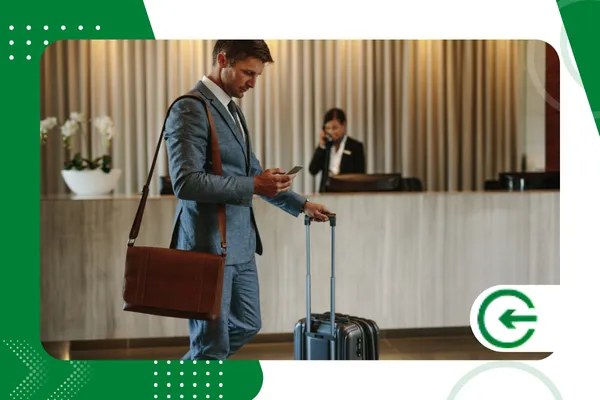
Let's analyze real-life scenarios where... Translation apps break down barriers in travel.Imagine you are in a restaurant in Seoul, South Korea.
The menu is indecipherable. You use the app's camera and immediately discover what each dish is, allowing you to choose with confidence and even try something new.
Now, imagine a health situation. You're in a pharmacy in Germany trying to explain a specific headache or allergic reaction.
Using conversational mode to describe your symptoms to the pharmacist is not only convenient; it's a matter of safety and well-being.
And what about navigation? You got lost in the streets of Marrakech. The GPS doesn't work well in the labyrinthine Medina.
You approach a local merchant and, using the app, ask: “How do I get to Jemaa el-Fna square?”. He understands and points you in the right direction.
These tools also enrich culture. Visiting the Louvre Museum and being able to translate plaques and descriptions of works that are not in English deepens understanding.
They transform the traveler from a passive observer into an active participant. The language barrier ceases to be a wall and becomes an easy door to open.
+ Is it Worth Importing a Cell Phone from Another Country?
What is the real impact of these apps on the tourism industry?
The impact of these apps goes far beyond individual convenience. They are reshaping the tourism economy on a global scale.
The language services market is vast. The consulting firm Mordor Intelligence estimated the size of this market at $76.78 billion in 2024.
Projections indicate that it should reach $104.31 billion by 2029. Mobile translation technology is one of the biggest drivers of this growth.
Small businesses are the biggest beneficiaries. A family-run inn in rural Italy or an artisan in Thailand can now communicate with global customers.
They can respond to booking emails, understand special requests, and receive feedback, all mediated by an automatic translator.
This decentralizes tourism. Travelers gain confidence to explore destinations "off the beaten track," in countries where English is not widely spoken.
The result is a more equitable distribution of tourism revenue, boosting local economies that were previously ignored by the average international traveler.
External Resource: To understand more about how Artificial Intelligence is being applied throughout the traveler's journey, from planning to the experience, read the analyses of... Panrotas portal, focused on the tourism market.
What is it that AI still can't (and perhaps never will be able to) translate?
Despite the impressive progress, the Translation apps break down barriers in travel. Up to a point. AI, in 2025, is still a logical tool; it is not human.
The biggest flaw lies in cultural nuances. AI doesn't understand sarcasm, complex irony, or humor that depends on a shared cultural context.
A recent study (uLme, 2025) on the subject highlighted this. AI does not decode nonverbal communication, which makes up the majority of human interaction.
The translator doesn't understand a hand gesture in Italy. Nor does he pick up on the tone of voice or body language that completely change the meaning of a sentence.
Ying Okuse, founder of Lingoinn, points out that language is, in essence, about connection. AI facilitates the transaction, but it doesn't replace the connection.
AI can translate "where's the bathroom?", but it doesn't replace the joy of making a friend laugh using slang you've learned.
Furthermore, Bernadette Holmes, a multilingualism activist, points out that learning a language develops the brain, improving cognitive flexibility. The convenience of AI deprives us of this exercise.
Therefore, the app is an incredible facilitator, but it shouldn't be a crutch that prevents us from attempting real communication.
Conclusion: The confidence to explore the unknown
Translation apps have fundamentally redefined the concept of "accessibility" in travel. They have lowered the most daunting barrier of all: that of communication.
The fear of not being understood has been replaced by the confidence that, in your pocket, there is a tool capable of solving almost any practical situation.
This has not only made travel easier and safer, but also richer. Technology gives us the courage to step outside the tourist bubble.
It allows us to sample local food, use public transportation, and visit authentic neighborhoods, knowing that we have a digital safety net.
The secret, of course, is balance. Technology should be the bridge, not the destination. Use the app to navigate, but don't forget to try human contact.
Learn the basics: "good morning," "please," "thank you." The smile you receive in return is something no artificial intelligence can replicate.
Frequently Asked Questions (FAQ)
1. Do translation apps use a lot of internet data?
Not necessarily. Most major applications, such as Google Translate and Microsoft Translator, allow you to download entire language packs.
By doing this in advance, via Wi-Fi, you can use text translation and, in some cases, even camera translation, 100% offline.
2. Is camera-based translation (augmented reality) truly accurate?
It is surprisingly accurate for clear, printed text such as street signs, menus, and product labels.
However, she still has difficulty with calligraphy (handwriting), highly stylized fonts, or text on reflective surfaces or in low light.
3. Can I trust these apps for a medical emergency?
For simple situations (describing pain, asking for medication), they are extremely useful. However, for complex diagnoses or legal discussions, they are no substitute for a professional human interpreter.
AI can miss a crucial nuance. Use it for initial help, but seek a professional for serious issues.
